
A resource and community space for modern marketers, sellers, and builders using customer voice to grow — together.
This hub is built for anyone who wants to do more with the voices of their customers. Whether you're scaling advocacy, building trust with proof, or rethinking how to go to market — you're in the right place.
How-to guides and playbooks for building with customer voice
Campaign-ready templates and swipe files
Benchmark reports and reference best practices
Event recordings, expert sessions, and community spotlights
Ask questions. Share ideas. Trade wins. This is your space.
You don’t have to figure this out alone. The Deeto community connects you with other leaders using customer voice to build better GTM motions, faster-growing brands, and smarter strategies. If you are interested in joining when it launches, sign up below.
Automate advocacy management workflows
Dynamically generate customer stories and social proof
Eliminate manual reference management
Track and report advocacy impact on revenue
Discover practical guides, templates, and tools to help your team close more deals, faster.
In B2B, your long-term success depends on how well you build and maintain trust with your customers. You aren’t just making one-off sales. That means keeping communication open, adding value at every stage, and showing up when it counts.
This is where customer relationship marketing comes in. It’s not just about marketing to people, it’s about marketing with them in mind, long after the initial sale.
In this guide, I’ll give you my seven best marketing strategies to strengthen customer relationships and keep them engaged for the long haul.
A customer relationship strategy is essentially your game plan for building long-term, loyal connections with your customers. It focuses on how you’ll nurture relationships during and after the sale through communication, support, education, and added value.
The goals: retention, trust, and brand advocacy.
In B2B especially, where deals are high-stakes and long-lasting, relationship marketing helps you stay top of mind, reduce churn, and turn satisfied customers into repeat buyers or even champions of your brand.
Think of it as shifting from “How do I sell to them?” to “How do I support them so well they never want to leave?”
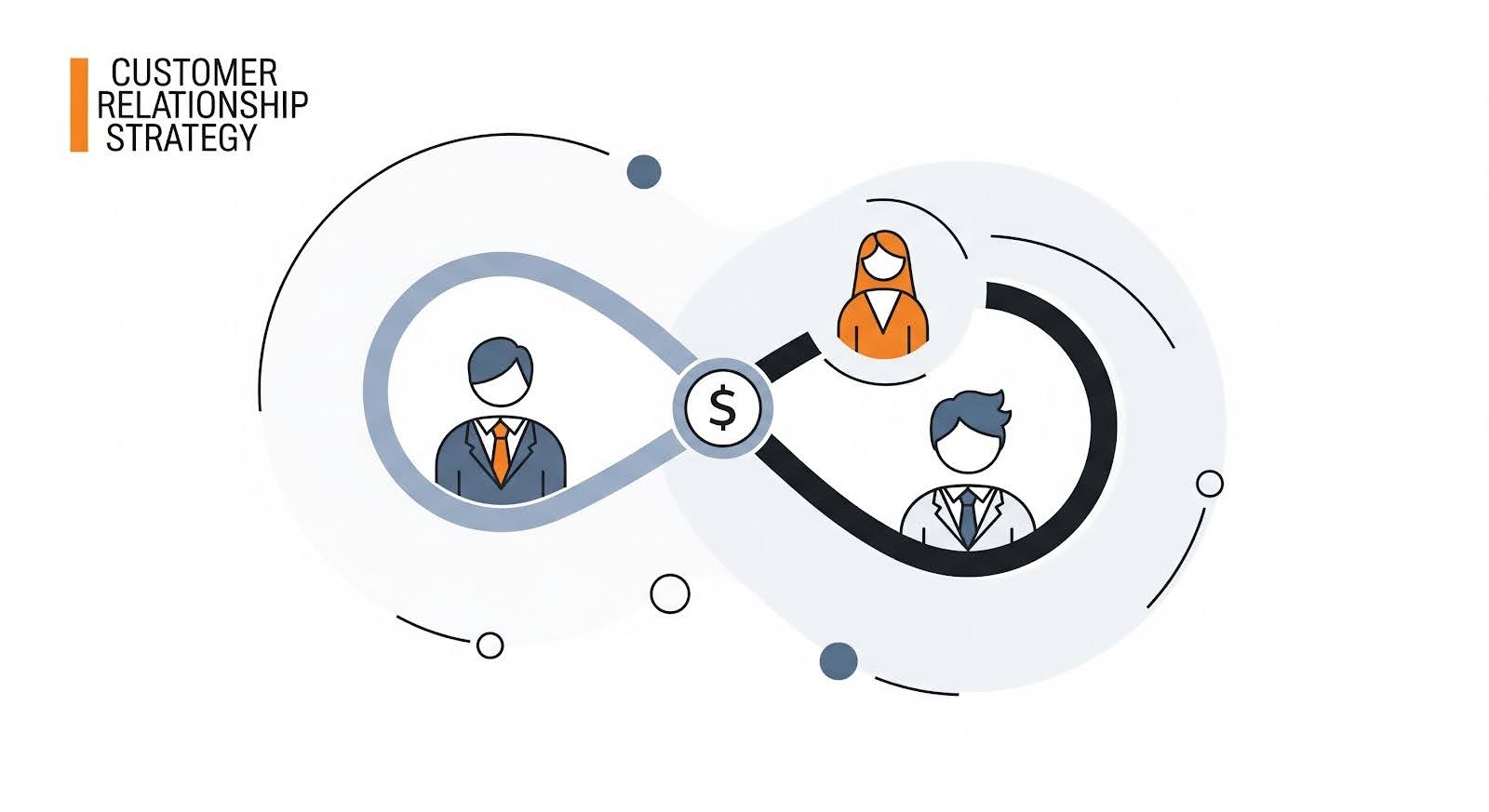
Customer expectations have evolved. They want more than just a product, they want a partner. A strong customer relationship strategy helps you deliver on that expectation and unlock real business value in return.
It costs 5-7x less less to keep a customer than to win a new one. A solid relationship strategy helps you stay engaged, proactive, and relevant. That leads customers to stick around longer.
When you consistently deliver value, your customers are more likely to upgrade, expand, or renew. That means more revenue per account without increasing your sales effort.
Happy, loyal customers reduce your need for aggressive acquisition spend. You’ll spend less time filling the funnel and more time growing the value of the base you already have. You’ll also have better reviews and more referrals, both of which reduce your average acquisiion cost.
Great relationships turn customers into champions. Whether it’s referrals, reviews, testimonials, or even customer references, your best marketing comes from the people you’ve already helped succeed.
In most SaaS categories, switching costs are only getting lower and features are only becoming more commoditized. One thing your competitors can’t replicate, though, is the one-to-one relationship you’ve built with a customer. Relationship marketing gives you staying power.
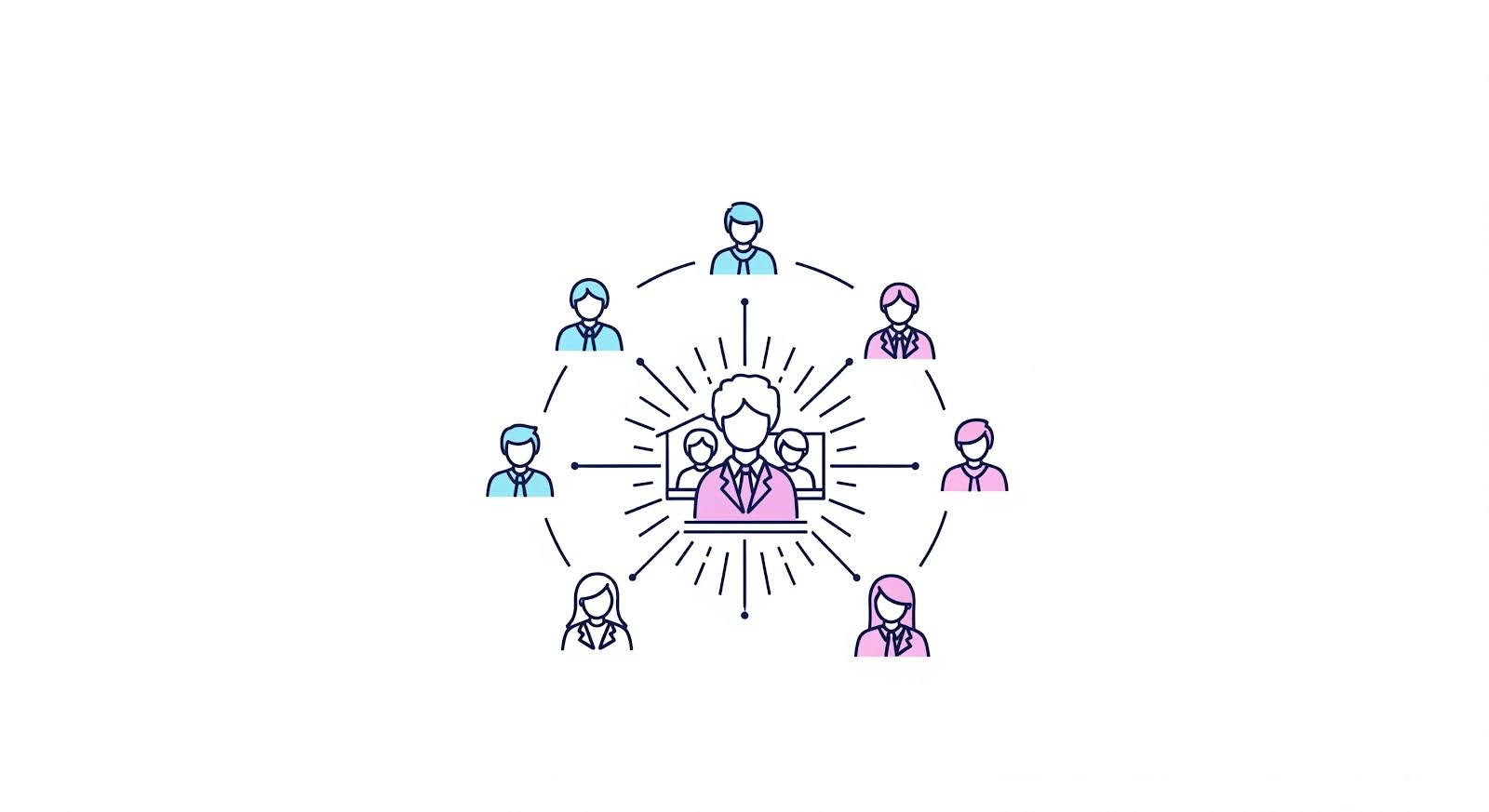
The relationships you have with your customers evolve as your product, market, and user base mature. And while growth introduces complexity, it also opens the door to deeper, more strategic engagement.
If you’re selling or rolling out AI, you're not just offering a tool. What you’re really doing is asking customers to trust an opaque system to make decisions for them. The opportunity: turn that fear of adoption into confidence through transparency.
Show your work. Offer “explainability” features, share real-world use cases, and give your customer success team the ammo they need to educate, not just support. The best companies turn AI from a black box into a competitive differentiator by bringing customers into the loop, not keeping them out of it.
In a subscription model, the sale is never really over. Every billing cycle is a new opportunity to prove your worth.
Automate the boring stuff — billing reminders, usage summaries, renewal notices — but don’t automate away the relationship. Use product usage data to trigger human check-ins. If someone’s slowly using your platform less and less or hitting their limit, that’s your cue to step in with tailored guidance or an upsell offer that actually makes sense.
You’re already sitting on a goldmine of customer data. Usage patterns, support tickets, and feedback loops are all at your disposal. Most companies leave it untouched (or at least don’t do as much as they could with it).
The smart ones connect the dots. If a customer hasn’t touched a new feature, queue up a guided tour. If they’ve opened three support tickets this month, escalate their success plan. Proactive outreach rooted in behavior is what turns your relationship from reactive to irreplaceable.
The bigger you get, the easier it is to treat people like numbers. That’s where you lose them.
But scale doesn’t have to mean impersonal. Build segmentation that goes beyond industry and job title; group users by goals, engagement level, or specific feature adoption. Then serve each cohort with relevant content, personalized onboarding, and targeted success playbooks.
You can also use AI to facilitate personalization at scale. Create triggers for when customers view certain content, use certain aspects of your product, and respond to certain campaigns. And use an AI-powered platform like Deeto to collect and analyze UGC and customer insights.
Every strong customer relationship strategy is built on three key pillars:
You can’t build a relationship with someone you don’t understand. And in B2B, where buyer journeys are long, layered, and involve an average of 13 different decision-makers, “understanding” goes way beyond name, job title, and industry.
You need profiles rooted in real behavior, including why they buy, how they buy, and what success looks like for them after they buy. You’ll have to interview customers, analyze journey data, and loop in your sales and success teams to capture additional insights. Consider decision influence, internal politics, procurement blockers, and what drives urgency on their end.
Your CRM, product analytics, customer support logs, and VoC data are all pieces of the puzzle. When you connect them, patterns emerge: what successful customers do early on, where drop-offs happen, and how different segments behave over time. Use that to tailor onboarding, predict churn risk, personalize communication, and even inform future product development.
Deeto helps turn this segmentation into action. By identifying your best-fit customers and surfacing their success stories in real time, Deeto enables peer-driven content, referrals, and insights you can’t get from analytics alone. It bridges the gap between knowing who your customers are and activating them as part of your growth strategy.
Strong relationships are built through ongoing, meaningful communication. Your messaging needs to be intentional, personalized, and delivered in the right context, at the right time.
Start by developing a multi-channel communication strategy. Customer relationship marketing is all about meeting your customers where they are and creating a seamless experience across all your digital touchpoints:
And message personalization is no longer optional. A generic blast might get you an open, but it won’t build trust. Use your purchase history, feature usage, and industry trends data to tailor your messaging. Even small personalization tweaks (like referencing recent activity or highlighting a relevant use case) make a huge difference in perceived value.
Content marketing plays a key role here. But instead of writing about your product, show customers how to be more successful with it. Share playbooks, customer success stories, and best practices rooted in your expertise.
This is where Deeto shines because it turns your most successful customers into credible voices who can tell your story more persuasively than any sales deck (and gives you the tools to reupurpose their feedback for marketing). When prospects and customers hear from real users solving real problems, they’re more likely to stay engaged.
What sets you apart in this category is proactive support. That could mean flagging an issue before the customer notices, offering solutions based on their specific setup, or looping in the right expert before escalation is needed.
Self-service also matters. A well-organized knowledge base, video walkthroughs, and AI-driven chat give customers the resources to solve problems on their own. But don’t hide behind automation; real humans should still be easy to reach when it counts. Self-service just acts as a filter for the basic stuff.
In my experience, the best support teams always partner with success teams. They learn from issues instead of just solving them. Trends in support tickets can inform product improvements, trigger customer education efforts, or spark outreach from your account managers.
.png)
Once you’ve built the foundation by understanding your customers, communicating consistently, and supporting them well, you can finally amplify those efforts. These seven relationship marketing strategies help you deepen loyalty, drive repeat business, and turn satisfied customers into your strongest growth engine.
I’ve already touched on this one a bit, but let’s dive a little deeper. True personalization is about delivering the right message, experience, or resource to the right customer at exactly the right time, and AI is what makes that scale possible.
Use a tool like Mixpanel, or your own product analytics to capture behavioral data from logins, feature usage, support tickets, webinar attendance, and NPS scores. AI can process these signals to update customer profiles in real time.
From there, you can trigger precise messaging:
And the beauty of AI is it learns. Feed it outcome data like who churned, who expanded, and who referred, then let it refine your targeting logic over time.
A feedback loop closes the gap between what your customers say, what you do about it, and how you communicate that back to them. To build one, embed feedback opportunities throughout the customer journey:
You can use Deeto to make feedback collection feel natural and timely.
Route all feedback to a single source of truth — your CRM, product board, or customer engagement platform (like Deeto, using our new Imported Contributions feature). Tag it by category (e.g., feature requests, UX issues, support gaps) so you can spot patterns fast.
Act on what you learn, then close the loop with communication back to them (“We heard you. Here’s what we improved.”). That’s where it becomes a relationship marketing strategy.
You don’t just get loyalty, you earn and reinforce it. And customer activation is the first step in that process.
Now… you can’t expect loyalty from a customer who’s barely touched your product. Activation means helping them reach their first “win” quickly. To show users the right market content, you first have to identify when customers are stuck or disengaged, then intervene by surfacing help content, triggering a check-in from CS, or guiding them toward unused features.
Once you’ve activated your base, loyalty and activation programs help lock in value and use your customers for organic growth. But you have to engage them.
You can reward repeat behavior (renewals, feature usage, or referral marketing) with exclusive perks like priority support, early access, discounts, and invites to beta groups. But the best loyalty strategies aren’t always transactional. They’re about recognition. A customer who feels appreciated is far more likely to stay and advocate for you.
Your customers don’t automatically realize the full value of your product just because they’ve signed a contract. Marketing has a critical role to play in making that value obvious, visible, and repeatable.
That’s why every company needs to create success-driven content. Your product team builds features, but your marketing team translates those into real-world outcomes. Use customer stories, tactical how-to content, and value-focused playbooks to show how others are winning, and make it easy for customers to replicate that success.
Think:
Then, use segmentation and automation to deliver the right content at the right time. If a customer just activated a feature, queue up a short tutorial. If they’ve been quiet for weeks, send a case study to reignite interest.
You’ll help your success team market internally, but this kind of behavior-based marketing supports them and keeps the product’s value front and center without needing a CSM on every account.
AI can analyze behavior patterns like declining usage, slow response to outreach, and drop-offs in engagement, then flag customers who are likely to churn before they actually do it. But here’s where marketing steps in:
It also surfaces accounts that are ready to expand based on signals like feature usage, team growth, and product limitations they’re reaching. Rather than hand that list straight to CS or account managers, smart customer relationship marketers run nurturing plays:
Omnichannel engagement means orchestrating touchpoints across the platforms your customers already use, in ways that feel coordinated and relevant. It’s the most critical strategy in your entire relationship marketing playbook because if you’re not showing up where your customers actually are, you’re not building a relationship.
Most B2B customers expect email as the baseline. That’s your foundation for updates, onboarding, and routine engagement. But you’ve also got to consider…
Pro tip: Your customer marketing and advocacy efforts should be just as personalized. Not every customer wants to participate in a case study or get on a reference call. Use Deeto to match contribution to comfort across your entire customer base.
If there’s any one thing you should be getting from this article, it’s that content isn’t just for lead gen. For customer relationship marketing content, the key is to stop thinking about it as a traffic play, and start thinking of it as a trust-building strategy.
Create resources that help them do their job better, get more out of your product, and look good to their boss.
And remember that consistency is what builds trust. A single killer ebook won’t drive long-term engagement. A steady cadence of relevant content delivered via email, shared on social, and embedded in your product is what keeps the relationship active and value-focused.
Tracking the right KPIs helps you understand not just how satisfied your customers are, but how engaged, loyal, and valuable they are over time.
Here are the key metrics to keep an eye on:
.png)
Deeto helps you capitalize on loyalty by making it easy for happy customers to leave reviews, refer peers, and share their success stories exactly how they want to. That’s why it’s the clear-cut winner for customer advocacy.
Ready to see it in action? Request a demo and discover how Deeto turns customer love into growth.


Explore 7 effective customer relationship marketing strategies to boost loyalty, engagement, and long-term growth.
Today is a milestone moment for Deeto. We’re thrilled to announce our $12.5 million Series A, led by Jump Capital with participation from UpWest, TAL Ventures, Mertor, TAU Ventures and a group of forward-thinking partners who share our belief: that the most powerful growth engine isn’t your product, pitch, or pipeline — it’s your customer.
At Deeto, we’re on a mission to turn authentic customer voice into structured, scalable, and revenue-driving insights. And now, with fresh capital and expanding momentum, we’re doubling down on building the future of how businesses earn trust, convert buyers, and inform innovation.
Why Now: Why Authentic Truth Has Become the New GTM Currency
Buyers have changed. They don’t want vendor-sourced promises. They want voices they can trust. They want to learn from people who’ve done it before them — on their own terms, in their own time.
But while buyer behavior has evolved, most go-to-market systems and processes haven’t. Static case studies, manual reference processes, siloed single point-in-time NPS scores, and customer stories buried in decks just aren’t enough anymore.
What today’s buyers need is the real truth, delivered in real time.
That’s why Deeto exists. We’ve built the only AI-native platform that helps companies activate the voice of their customers across every stage of the buyer and customer journey. And we’re only getting started.
What We Do: Turn Customer Voice into a Growth Engine
Deeto transforms how businesses collect, manage, and activate customer voice. Using our platform, companies like Atlassian, Dropbox, Klaviyo, Bloomreach, and 6Sense are able to:
The result?
What's Next: A Sneak Peak at Deeto 2.0
With our Series A, we’re accelerating into our next chapter: Deeto 2.0.
Deeto 2.0 isn’t just a new version of our platform — it’s a reimagined foundation for how companies scale trust, truth, and relationships in a post-AI, post-hype world. We’re moving from proof points to customer intelligence infrastructure.
To support this evolution, we’re introducing a new layer to our platform: Deeto AI Agents — purpose-built intelligence that helps teams go from insight to action without adding headcount.
These agents aren’t just automation for automation’s sake. They’re about scaling what’s real — the voices, insights, and stories that actually influence how businesses grow.
In a world where AI-generated content is flooding every channel, the only voice that cuts through is the one that’s real. The lived experience of your customers isn’t just a nice-to-have. It’s your most defensible advantage.
With this funding and momentum, Deeto is here to make that advantage accessible, scalable, and felt — everywhere it matters.
Stay tuned for more on the Deeto 2.0 front.
To our customers, partners, and new believers: thank you for trusting us to build something bold. If you’re ready to turn your customer voice into a competitive edge, reach out or follow us as we shape what’s next.
The future is customer-led. Powered by Deeto.

We're building the infrastructure to turn customer voice into a dynamic engine for trust, growth, and innovation.
Your customers are saying incredible things about you on G2.
Now, you can turn that praise into pipeline – automatically.
We're excited to announce a powerful new integration between Deeto and G2, launching as part of G2’s June 2025 Innovation Release. This partnership allows mutual customers to seamlessly bring their G2 reviews into Deeto, connect them to reference profiles, and publish them across marketing, sales, and customer advocacy channels – with full control.
Deeto helps turn customer voices into a strategic growth engine – by unifying reviews, references, testimonials, and customer stories in one platform. Now, with this new G2 integration, your best G2 reviews can automatically fuel every stage of the buyer journey – from discovery to deal close.
The Deeto + G2 integration makes it easy to:
It’s advocacy, made scalable – and deeply personal.
In today’s B2B landscape, buyers trust customers more than brands.
Yet most teams still struggle to bridge the gap between G2 reviews and their GTM strategy.
This integration solves that.
You’ve worked hard to build a strong presence on G2. This integration helps ensure those great reviews reach their full potential across the entire buyer journey. Here’s why this matters — for every part of your GTM team:
Customer Marketing
You already know the power of advocacy — but it’s time to scale it.
With this integration, you can easily turn G2 reviews into dynamic content across your programs: nurture streams, community content, reference hubs, and more — without manual work or copy/paste hacks.
Product Marketing
G2 reviews are packed with customer language and proof points.
Now, you can seamlessly bring them into your product marketing narratives: reinforce positioning, enrich launches, support competitive plays, and arm sellers with proof that resonates.
Sales Enablement
Buyers trust peers — but sellers often struggle to bring authentic customer voice into live deals.
This integration lets you surface the right G2 reviews at the right moment — personalized for deal stage, industry, or persona — to drive conversion and speed sales cycles.
CMO
You’ve invested in building customer trust — it’s time to turn that trust into pipeline and revenue.
This is an easy lever to expand your advocacy strategy, improve content ROI, and align marketing and sales around real customer proof — activated everywhere buyers engage.
You already earned your customer’s love.
Now, Deeto + G2 lets you fully leverage it.
All while keeping full control over what goes live and where.
This integration is available to mutual G2 and Deeto customers starting June 2025.
If you’re already a Deeto customer: Reach out to your CSM to activate — it’s quick and easy to enable. Available to G2 customers on Review Growth+Core, Growth+Core+BI, Growth+Core+Content, or those licensing G2 Content via Extra Impact. If you're unsure about your eligibility, we're happy to check with G2 on your behalf.
If you’re new to Deeto: Let us show you how Deeto + G2 can turn customer voice into your most powerful revenue driver. Book a demo here.
Your customers have already spoken on G2.
Together, we’ll help you make sure their voices are heard — and drive your next wave of growth.

Your customers are saying incredible things about you on G2. Now, you can turn that praise into pipeline– automatically.
The B2B buyer’s journey isn’t a straight line. It’s a complex, multi-stage process that involves research, collaboration, risk assessment, and (often) a long list of decision-makers.
Unlike in B2C, where a single person can make a spontaneous purchase, B2B buyers move through stages with intent, deliberation, and internal consensus. They’re not just buying a product but investing in a solution that impacts their team, budget, and business outcomes.
If you want to sell to other businesses effectively, you need to understand how your buyers think, what they need at each step, and who’s influencing their decisions behind the scenes.
In today’s guide, we’ll go over all of that and more.
The B2B buyer journey is the path your B2B customers take from the moment they realize they have a problem to the point where they choose a solution (ideally, yours). It encompasses multiple stages and touchpoints across several decision-makers, and it takes weeks or even months.
Compared to B2C, B2B buying is:
For businesses, purchase decisions are about solving a business challenge, reducing risk, and aligning with internal stakeholders. As a vendor or seller, your job is to understand it well enough to support your buyers every step of the way.
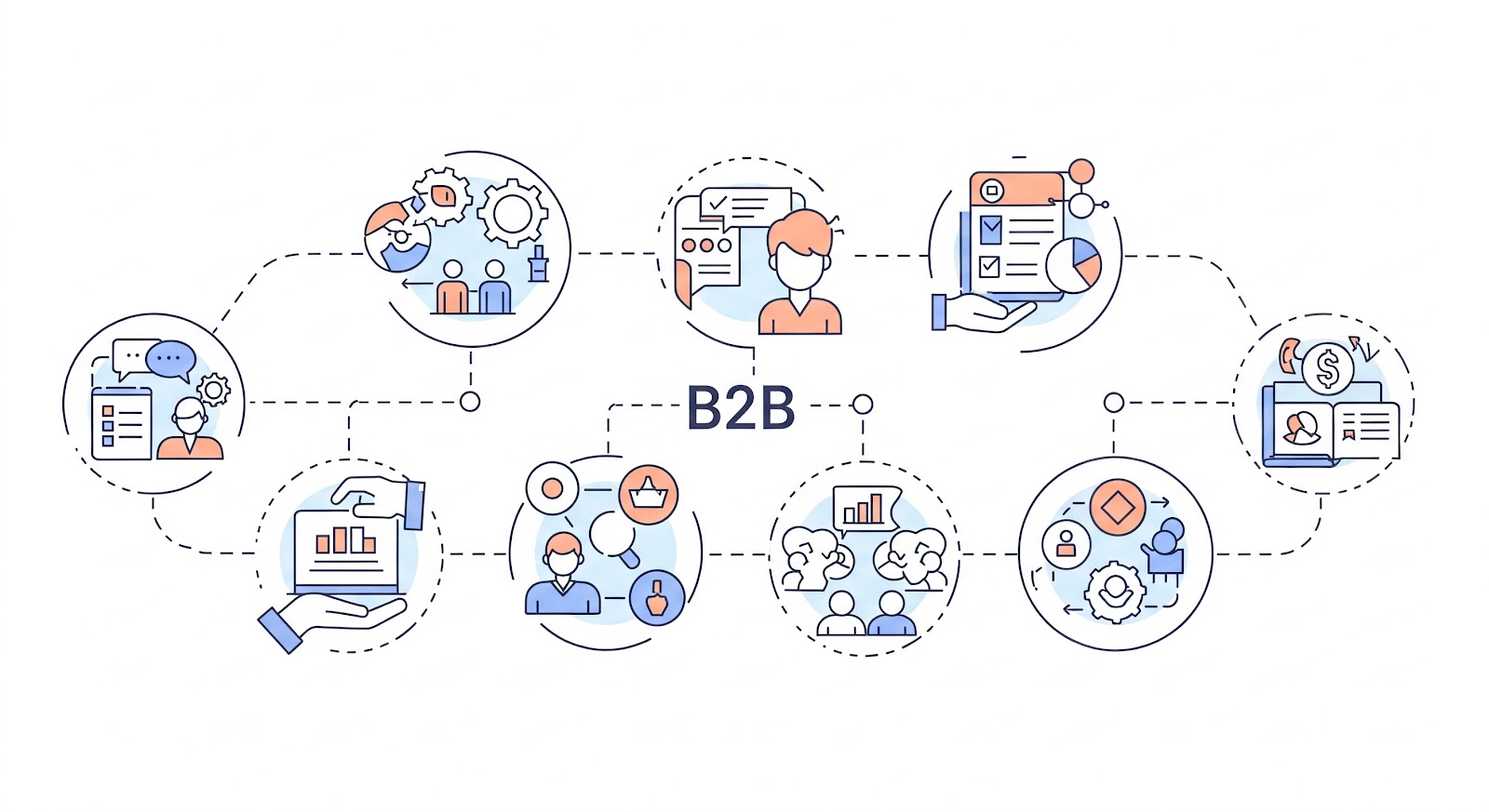
The B2B buyer journey in 2025 looks nothing like it did ten years ago. Today’s buyers are independent, digital-first, and harder to reach through traditional channels.
Buyers don’t wait for a sales call to get answers, they go get them themselves.
From start to finish, data from Gartner shows that B2B buyers spend only 17% of their total purchase journey talking to sales reps. That’s split between all vendors, so your company’s individual impact is actually less than 5%.
According to 6sense’s 2024 Buyer Experience Report, the typical buyer is ~70% through the decision-making process by the time they reach out, and 8 in 10 buyers initiate contact with a vendor, not the other way around.
Buying committees are also bigger and more cross-functional. A marketing director might start the search, a procurement officer joins halfway through, and a C-level exec signs off at the end. 6sense’s report revealed that the average buying group now has 11 people.
Not every step leaves a data trail. Buyers now rely on what we call “shadow channels” — places like Slack groups, LinkedIn DMs, Reddit threads, private WhatsApp chats, and niche professional communities.
You won’t see these interactions in your CRM or website analytics. But they’re powerful.
A buyer may ask for honest feedback about your product in a RevOps Slack community. That word-of-mouth matters more than your website or ad copy, and you’ll never know it happened unless someone tells you.
AI helps buyers move faster, analyze more options, and customize their research. Tools like ChatGPT, Perplexity, and buyer-focused comparison engines let users summarize pages of research in minutes.
At the same time, growing privacy regulations and tools like email blockers or cookie restrictions mean less visibility for you, the vendor. Anyone can now research anonymously, and you may not even realize they’ve engaged with you until they’re ready to talk.
For instance, a VP of Sales could generate a vendor comparison table with ChatGPT, read anonymized G2 reviews, and only reach out once they’ve narrowed their list to two options, without ever downloading a whitepaper or filling out a lead form.
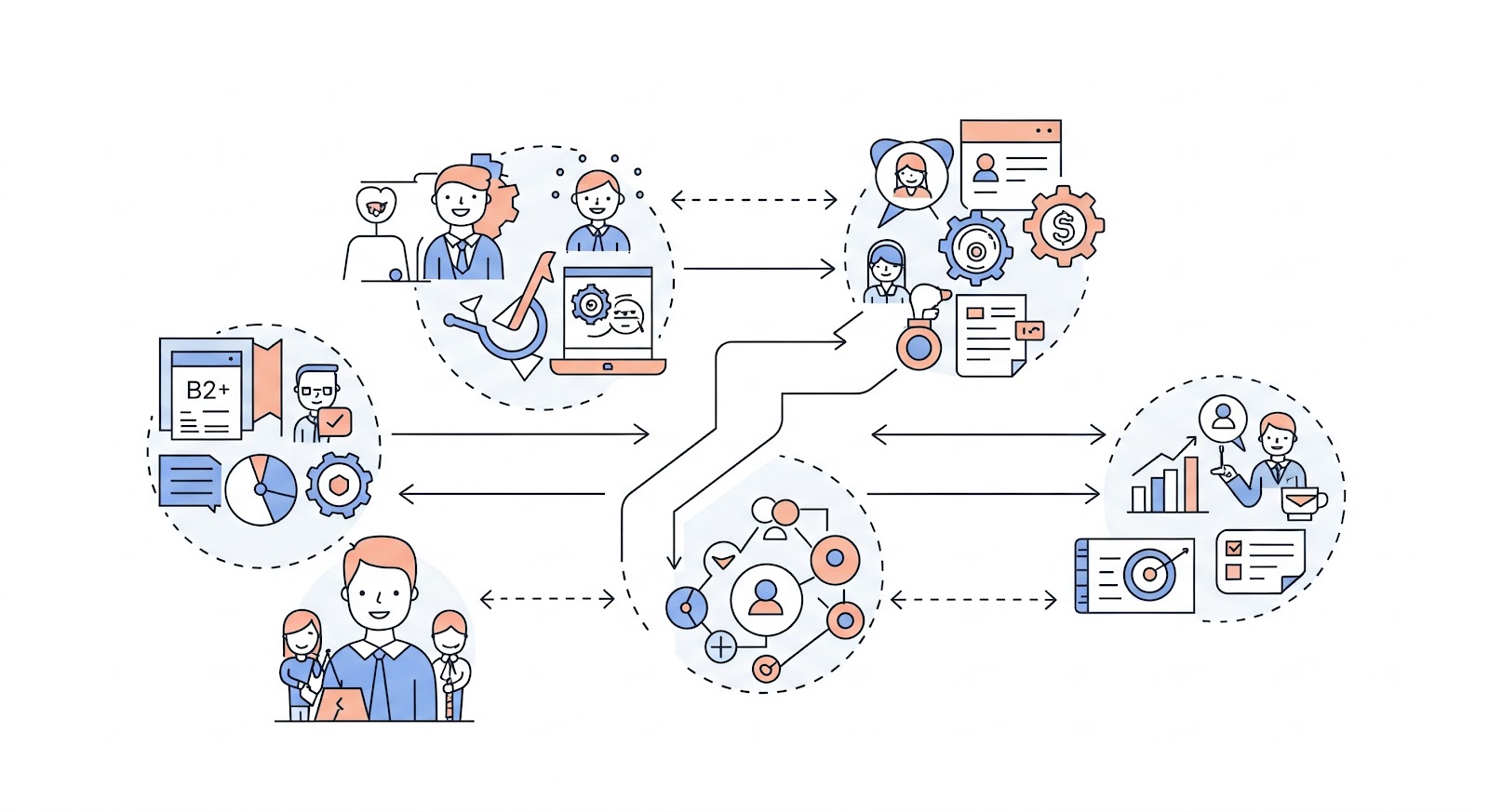
To understand how to sell better, you need to think like your buyer. Every B2B purchase follows a general path from first recognizing their problem to becoming a loyal advocate. Each represents real shifts in mindset, behavior, and internal discussions happening behind the scenes.
The Awareness stage begins when something triggers your buyer to recognize a problem or opportunity.
Maybe their team is wasting hours on manual reporting. Maybe their old vendor just raised prices. Maybe they read about a competitor adopting new tech. Whatever it is, it sparks curiosity, and then research.
Buyers start Googling, reading blog posts, asking peers, and exploring industry forums. They're not looking for you yet, but they are looking to define the problem and understand what’s possible.
At the Consideration stage, the buyer knows what kind of solution they need. They’ve named the problem and are narrowing their options.
This is when they compare categories (e.g., custom development vs. no-code tools), gather peer input, and begin to understand how different vendors solve their problem in different ways.
This stage is all about education and validation. Buyers here will…
A RevOps leader evaluating CPQ tools might compare DealHub, Salesforce CPQ, and PandaDoc based on features, usability, integrations, and customer support.
By the time a B2B buyer reaches the Decision stage, they’ve made a shortlist. Internal alignment becomes the priority.
This is where trust, clarity, and support matter most. Buyers will…
Even if the primary buyer loves your product, they still need buy-in from finance, IT, legal, and sometimes the C-suite. Expect pricing conversations, security reviews, reference calls, and a lot of back-and-forth.
Successful sales reps use a methodology like MEDDIC to adapt to each buyer’s needs here.
The journey doesn’t end when the contract is signed. Your buyer now becomes a user, and your job is to help them succeed. Onboarding, product adoption, and ongoing support determine whether they’ll renew, upgrade, or churn.
This stage is your best chance to turn customers into long-term advocates. They’re going to measure the product’s impact against expectations. If the value is there, you can get them to recommend your product to others.
You can’t improve the buyer journey if you don’t understand it.
Mapping the B2B buyer journey means breaking down how prospects actually experience your brand, from the first moment of awareness to becoming a customer (and beyond). It’s the foundation of effective marketing, better sales alignment, and a smoother customer experience.
Here’s exactly how to do it, step by step:
Start by talking to real buyers. You need their perspective, not just your assumptions.
Set up structured interviews with recent customers, lost deals, and long-term users. Focus on uncovering their actual thought process. What triggered their search? What confused them? What built trust (or broke it)?
Ask open-ended questions like:
Track product adoption as well, and survey/interview your customers after they’ve been using your product for about three months. That’ll reveal the real value your product delivers (which is often different from what you market) and what onboarding friction they experienced.
Pro tip: Review transcripts with an AI tool like Grain, Gong, or Fireflies.ai to surface patterns in objections, language, and turning points. You’ll uncover what humans miss, like emotional cues or timing gaps.
Now, trace every single interaction a buyer has, all the way from when thye’re doing anonymous research to when they sign the deal.
Look at both digital and human touchpoints. Track website visits, ad clicks, downloads, webinar attendance, emails opened, and chatbot conversations, as well as sales calls, Slack intros, LinkedIn DMs, and in-person meetings if there are any.
Plot this out chronologically using a tool like Lucidchart or Miro to visualize the flow.
Make note of:
Certain aspects still might not be clear, so it’s a good idea to reverse-engineer closed-won deals in your CRM. Identify which paths are most common for high-LTV and high-CVR customers. You may find your best buyers never click ads, but often attend events or come via referrals.
This is where most companies fall flat. They have great content, but it's not aligned with where the buyer is mentally.
Each stage of the journey demands different types of messaging:
Since you probably already have existing content, audit it and tag each asset to a journey stage. You’ll likely find gaps (e.g., lots of top-of-funnel blog posts but no decision-stage material). Fill them strategically with the format and channel your buyers prefer.
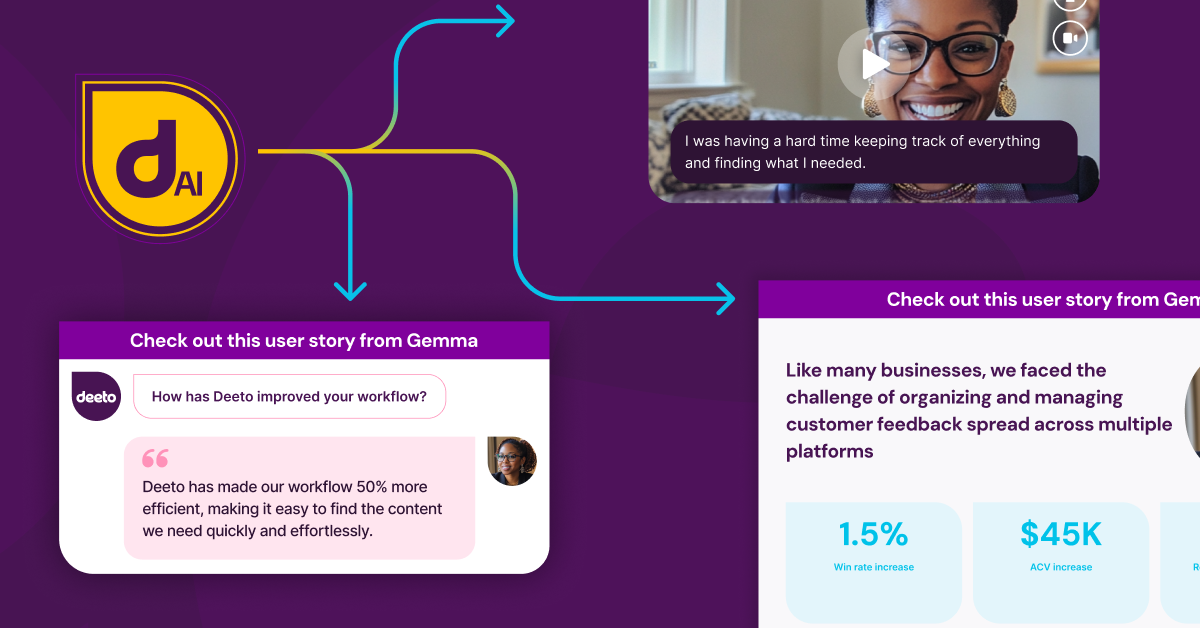
Forrester data reveals something we’ve known for what feels like forever: most B2B buyers (90%+) trust peers in their industry, while almost none (29%) trust vendor sales reps.
That’s why customer advocacy software is such a game-changer. Deeto lets you bring the Voice of the Customer into the buyer journey earlier through embedded customer stories, testimonial carousels, and even on-demand reference calls.
Use it to:
On top of that, Deeto’s AI-powered smart-matching and dynamic display algorithms allow you to dynamically serve social proof by industry, company size, or buyer role. This makes every interaction feel personalized, even before sales gets involved.
Even if you understand the buyer journey inside and out, executing against it is a different story. Modern B2B buyers are unpredictable, independent, and skeptical, so some businesses struggle to keep up.
Here are four of the most common challenges we see even experienced teams get tripped up by:
Your CRM might tell you a lead came from a demo request. But the buyer? They first heard about you in a Slack group, Googled you a week later, lurked on your founder’s LinkedIn posts for a month, clicked a retargeting ad, and then filled out the form.
Linear attribution models (like first-touch or last-touch) miss this completely.
Solution: Shift your mindset from precision to pattern recognition. Use blended attribution models and supplement with qualitative inputs.
Your buyer is on one journey. But too often, your teams act like they’re on three different ones.
Marketing optimizes for leads, sales pushes for pipeline, and CS handles the post-sale. A disconnect leads to drop-offs, mixed messages, and frustrated customers.
Solution: Build your buyer journey together, and operate around shared goals.
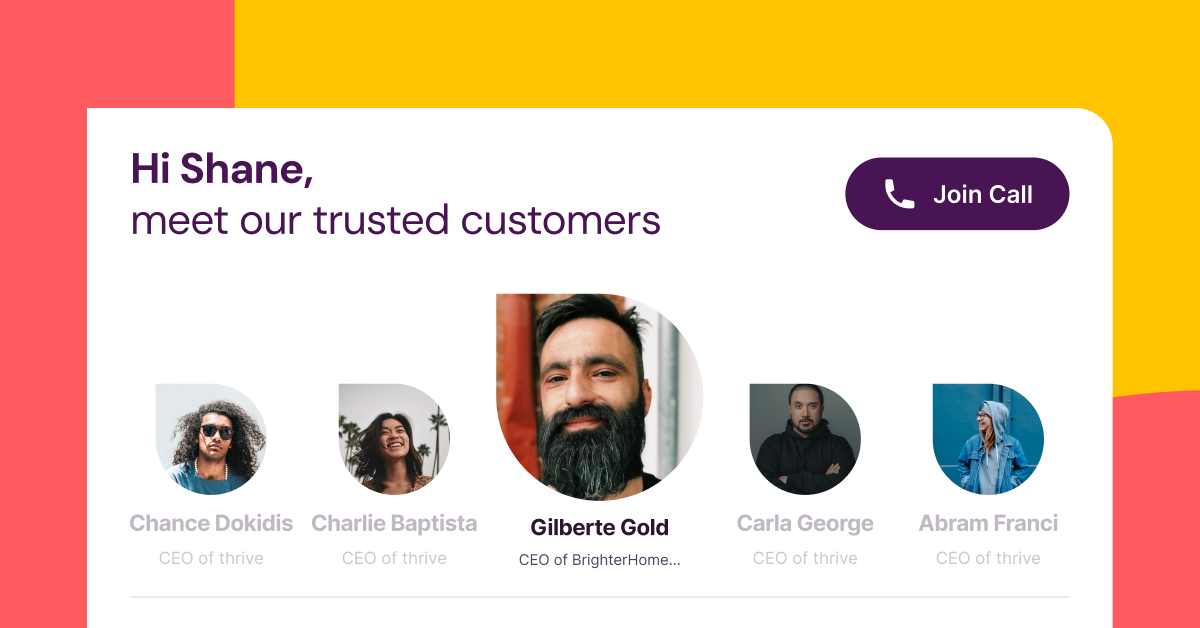
Today’s buyers expect tailored experiences, with 86% showing preference for 1:1 marketing. But lots B2B interactions still feel generic: same emails, same decks, same pitch.
That’s a trust killer.
If a FinTech CMO sees the same pitch as a Head of Ops at a logistics startup, they’ll both tune out.
Solution: Inject personalization and proof at every stage.
If every helpful resource is locked behind a form, you're slowing down the journey.
Modern buyers don’t want to talk to sales before they’re ready, and they’re skeptical of anything that looks like a trap (like requiring an email just to read a pricing doc). So, if all your content is gated, you’ll all but guarantee it won’t get read.
Solution: Collect emails for high-intent bottom-of-funnel content (e.g., a “free site audit” offer). Un-gate the rest.
One of the biggest mistakes we see companies make in B2B sales and marketing is treating the buyer journey as though it only concerns that specific team.
In reality, the buyer journey touches every team: marketing, sales, customer success, product, even finance and support. If each department is using its own version of the journey, the buyer ends up experiencing a fragmented, confusing process.
To fix that, you need tight alignment. That starts with shared visibility and continuous feedback.
Don’t build five versions of the journey. Build one.
Your single journey map should outline:
This map becomes your company’s shared source of truth. Everyone—from your SDRs to your onboarding specialists—knows where they fit and how their actions impact the buyer experience.
Alignment doesn’t happen through documentation alone. It’s built through ongoing, structured communication around what’s happening with buyers.
Broadly speaking, this is what strong feedback loops look like:
Trust is the biggest barrier in B2B sales, and customer advocacy helps you break through it.
When a buyer comes through a cold channel, they need to verify everything. Is this the right kind of tool? Will it integrate with our stack? Do others like us use it? Can we trust this company to follow through?
But when a prospect enters your funnel via a referral or peer recommendation, they already have those answers. They've skipped the doubt. They've skipped the skepticism. And often, they've skipped the first few micro-stages of the buyer journey altogether.
They already know:
That means you can bypass early education and move straight to relevance. You can tailor your content and conversations toward ROI, implementation, and decision-making, because the "should we trust this brand?" conversation is already handled.
Instead of hoping someone mentions you in a Slack group or refers you over coffee, Deeto turns social proof into a proactive part of your go-to-market strategy.
It helps you:
Want to see it in action? Request a demo and we’ll show you how it fits into your buyer’s journey.

Explore the 2025 B2B buyer journey, key stages, mapping steps, and trends to align your GTM teams and boost conversion.
“Content is king.” And in 2025, it’s the entire front half of your sales engine.
Last year, 6sense studied B2B buying behavior and released their 2024 Buyer Experience Report. In it, they revealed that buyers increasingly value autonomy in their purchasing process.
So, in most cases, the entire first half of the sales cycle happens before your sales reps can get a word in. Outbound alone won’t work. You need web content.
In today’s article, I’ll break down exactly which types of marketing collateral every B2B company needs to stay ahead this year.
Marketing collateral is any branded asset, digital or printed, that you use to promote your products or services and move prospects through your funnel. Examples include web content, social media posts, e-books, case studies, and demo videos.
There are a four main reasons to create and distribute marketing collateral:
Now, this isn’t just about making case studies and writing blog posts based off of a keyword list. It’s dynamic, digital, and strategically aligned with your customer journey. Every asset should serve a clear purpose: to move prospects closer to a “Yes.”
In B2B, single-person deals hardly exist. The average buying group includes 10 people, each of whom has their own priorities and pull in the decision-making process.
But, like I’ve already pointed out, most of their decision-making happens without you. Your sales rep won’t be in the room when they’re Googling solutions, comparing vendors, or presenting your pricing to the CFO.
That’s why your marketing collateral isn’t just support, it’s strategy.
B2B sales cycles can stretch from a month or two (for simple SaaS products) to 12+ months (for enterprise deals). That means you need a library of collateral that works at every stage of the funnel and speaks to every type of buyer.
Marketing today is zero-sum. When a buyer searches, only one brand gets clicked. If your content doesn’t rank, isn’t visible, or fails to answer their question, guess what? Your competitor’s does.
So your job is twofold:
We’ve made it clear: your buyers are doing the research with or without you. That means every piece of content you put out needs to work hard, speak clearly, and support different decision-makers across the funnel.
Strategically distribute enough of these seven kinds of collateral, and you’ll have a never-ending stream of MQLs that actually align with your ICP:
Before you impress anyone with your pitch deck or case study, your brand needs to look and feel consistent everywhere. That’s where your logos and brand guidelines come in. This is what guides everything from your sales PDFs to your LinkedIn graphics.
When done right, they:
Good news is, you don’t have to overcomplicate this. Even a basic brand kit (logo files, color codes, typography, and tone-of-voice guide) goes a long way.
Sales enablement collateral is the content your team uses to move prospects from "interested" to "ready to buy.”
These are the materials your reps share with prospects to help them make the right purchase decision.
But they’re not just for your sales reps. They’re for your buyers as well. They’re the ones forwarding your deck to their boss. They’re the ones pulling up your case study in a budget meeting. They’re the ones pitching your product for you.
You need to give champions inside your prospect’s company the tools to sell on your behalf. That means collateral that’s simple, skimmable, and laser-focused on value.
Digital marketing collateral is any visual or written content you use to promote your brand online and drive inbound traffic. It’s what fuels your demand gen engine and captures attention across social media, email, and paid ads.
Social media graphics stop the scroll and reinforce your brand on LinkedIn, Twitter, and even Instagram (yes, even for B2B). They reinforce your social proof and marketing content through short-form posts. Your employees should also use it on their profiles.
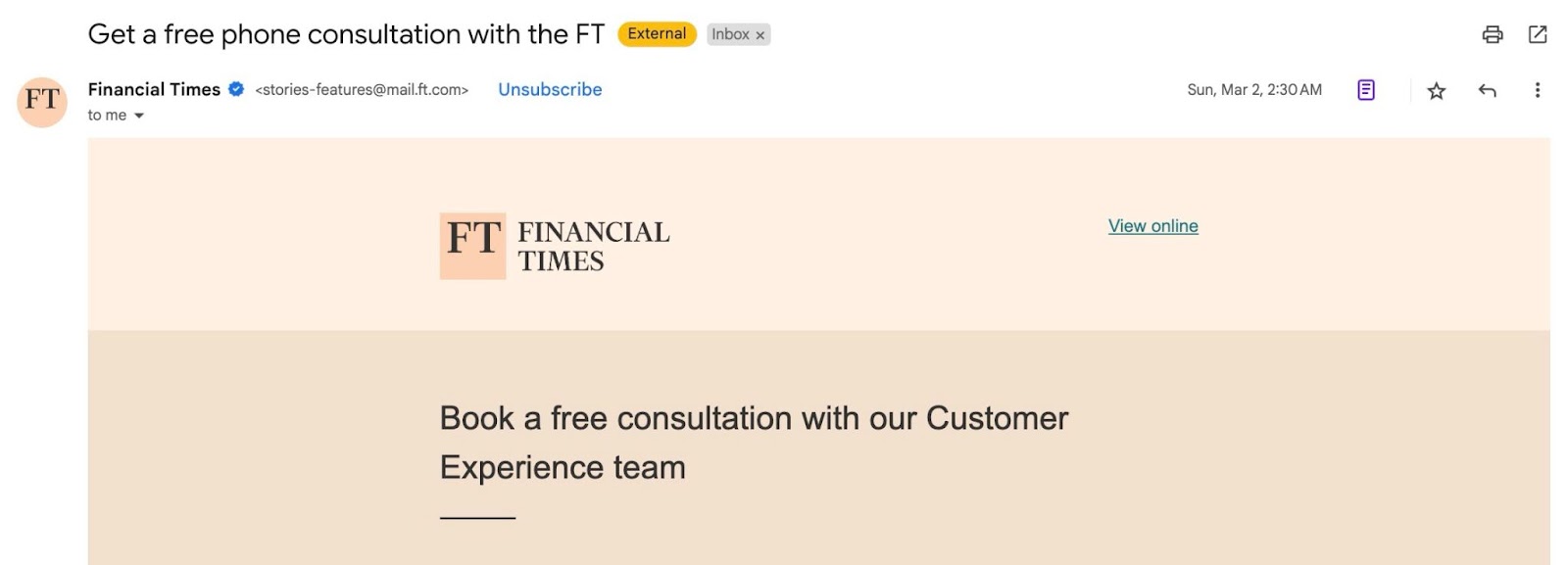
Email campaign templates are layouts you can use across newsletters, product updates, and nurture sequences. They should be mobile-friendly, skimmable, and designed to convert clicks.
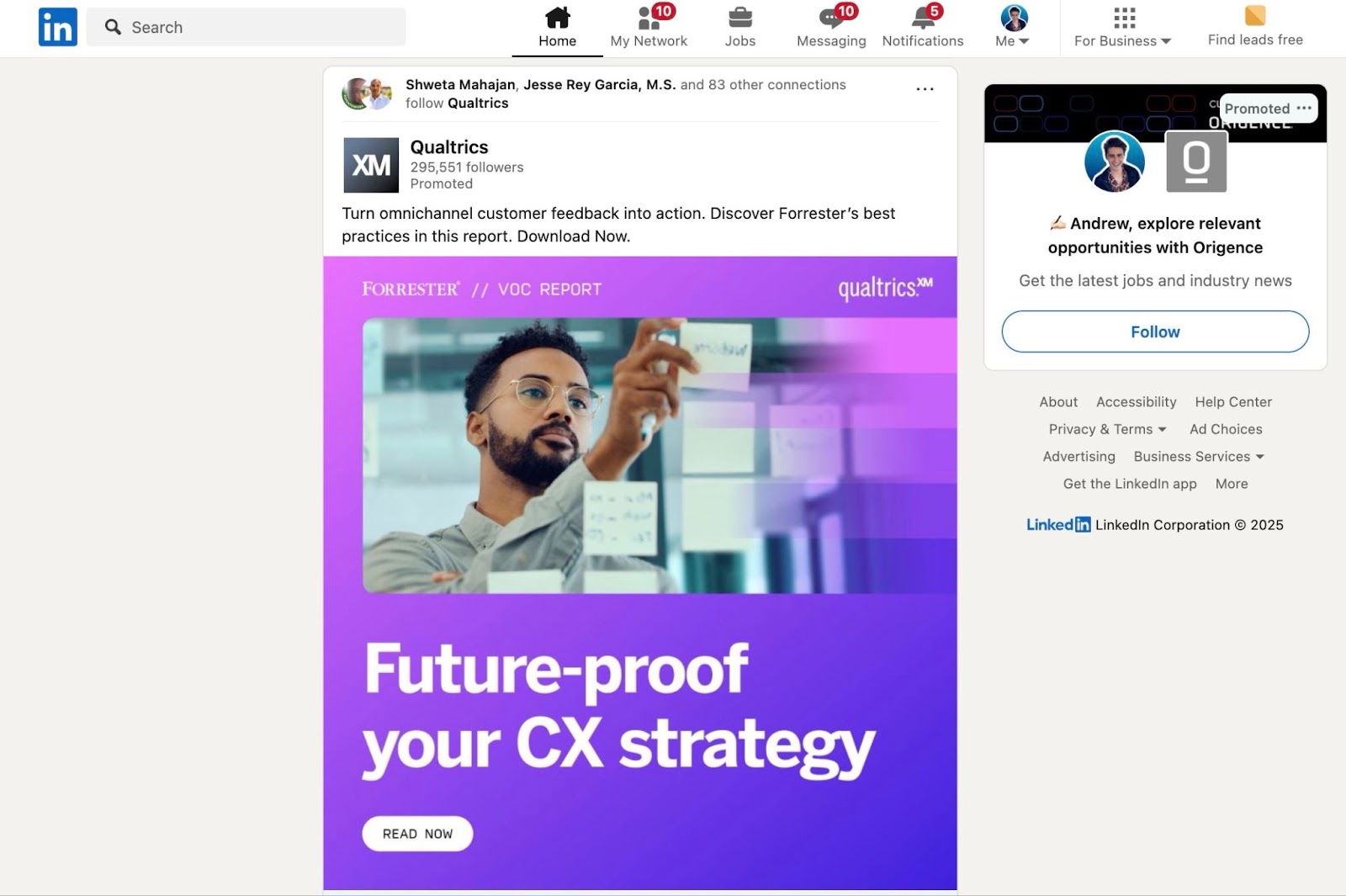
Digital ads like banner ads, retargeting visuals, and paid search graphics are similar to social media graphics, and they need to be tightly aligned with your landing pages to drive conversions.
For instance, this ad I just got for a new Qualtrics X Forrester report…
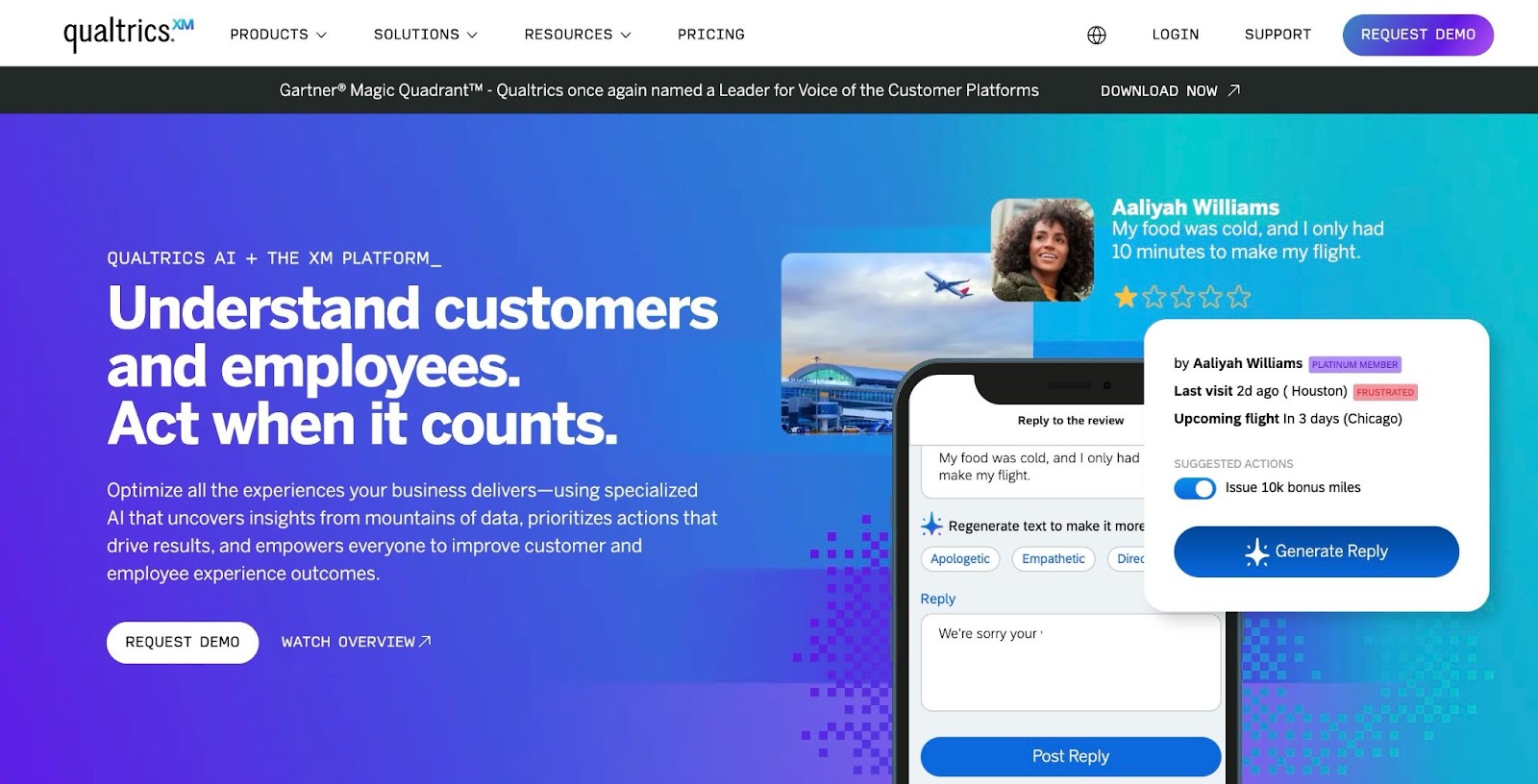
…matches Qualtrics’ website aesthetics perfectly.
Even in a digital-first world, print still plays a role. You’re still showing up at events and in-person meetings, and print collateral is perfect for when you want to leave something behind that doesn’t get lost in someone’s inbox.
Today, though, most of your information is online. So it’s less about bulk brochures and more about high-impact, well-designed assets that feel intentional.
Keep these things short and visual, and include a QR code where your prospects can learn more.
This is the part of your marketing that people are actually reading. The things prospects find on Google or ChatGPT, bookmark, forward to colleagues, and use to justify buying your product. In fact, you’re reading ours right now.
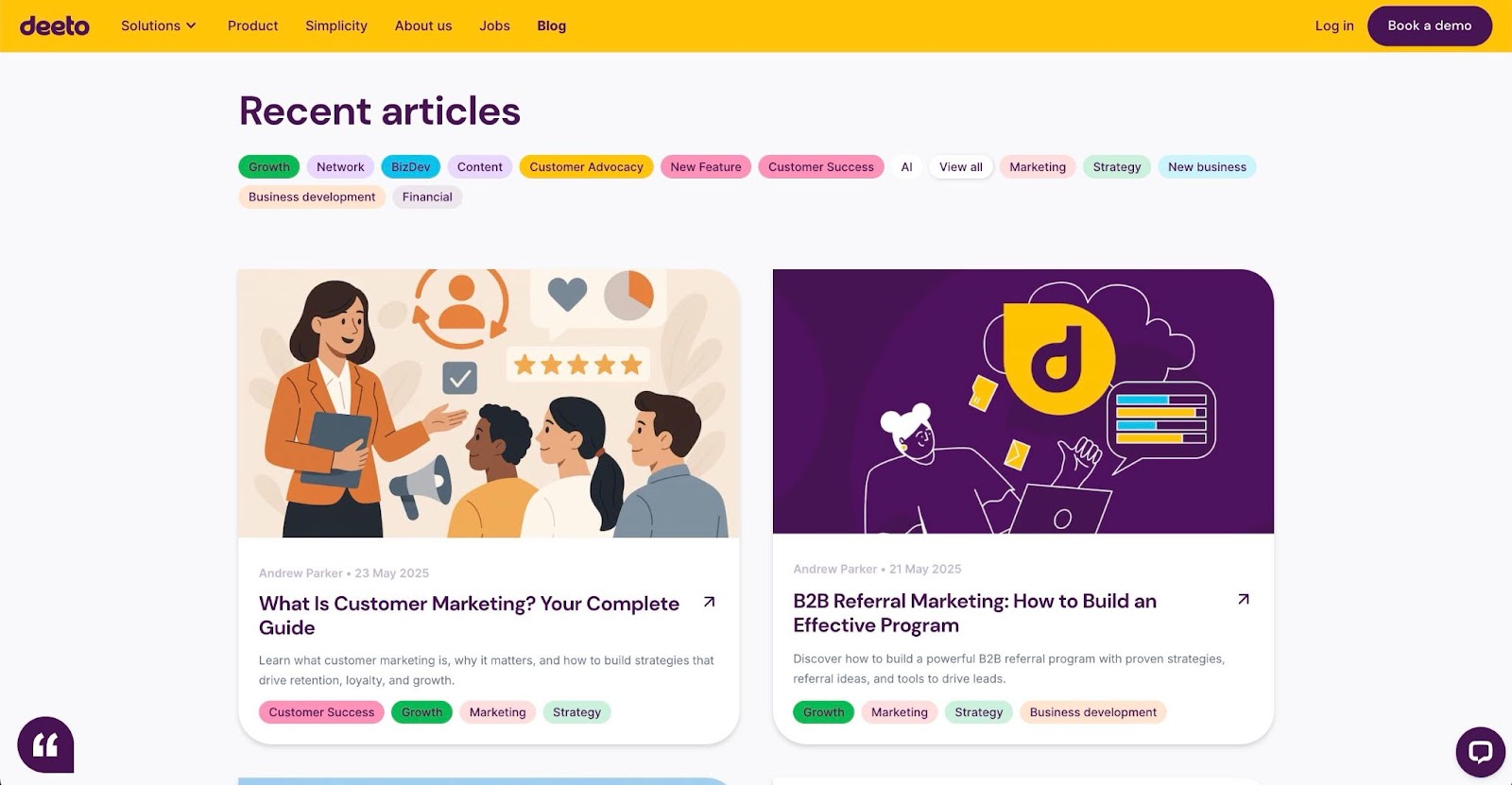
Content marketing sits at the core of your demand gen, lead gen, and conversion strategies. Some of it’s TOFU. Some of it’s BOFU.
A healthy mix of each will help you pique interest at the top of the funnel and nurture high-value leads up until they’re ready to book a call.
Event and trade show collateral is the physical and digital material you use to attract attention, communicate your value fast, and leave prospects with something they’ll actually keep.
It includes:
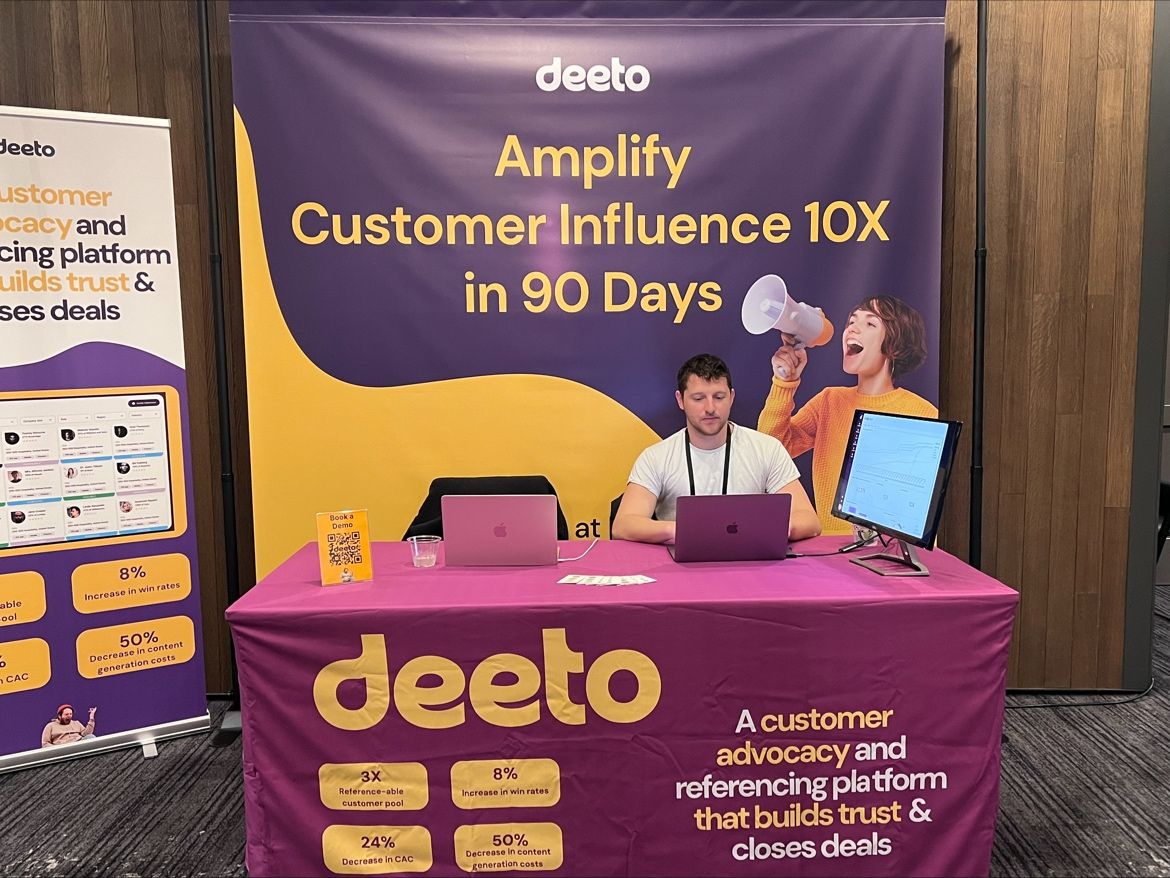
Just like with digital collateral, brands that blend bold visuals with clear messaging win.
Internal marketing collateral is the behind-the-scenes material that ensures your team knows how to talk about your product, share your message, and deliver a consistent experience, whether they’re in sales, support, or engineering.
A few of the things you’ll develop:
This kind of content helps you train, align, and activate your entire org so everyone’s pulling in the same direction.
Most marketing teams crank out assets just to “check the box.” They know they need it, so they post a few below-average blog posts, put up a few testimonials, and call it a day. Then they wonder why they don’t rank or convert.
If you want collateral that drives pipeline, closes deals, and makes competitors irrelevant, here are our six best tips:
Don’t just talk about features, reverse-engineer your content from the actual buying journey.
Ask: What’s happening in the buyer’s head at this exact moment?
Use real call transcripts, objection logs, and buyer enablement data to craft collateral that answers their internal questions within your content.
Smart marketers don’t make 100 new things. They make one killer asset and spin it 12 different ways.
Let’s say you write a whitepaper. From that, you can extract:
You can also repurpose customer feedback for marketing content. Using a platform like Deeto, you can collect input from your customers in the form of testimonials, product feedback, and results (e.g., ROI or a % increase in sales).
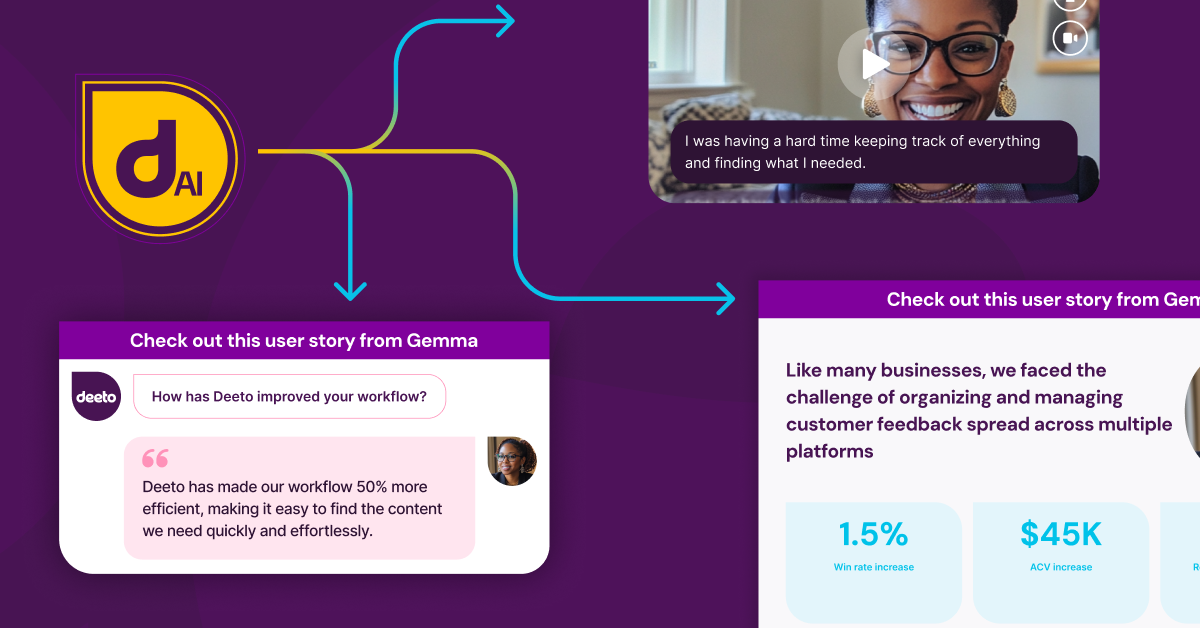
From there, our generative AI builds full case studies and clips use cases and testimonials you can distribute across your website and socials.
Too many marketers create for vanity. Real growth comes when every asset ties to one of three things:
Before you make anything, ask what metric it’ll move, then track it. If your new case study didn’t get shared by reps or downloaded by buyers, figure out why that type of content isn’t making a difference and what might be more effective.
You don’t need to personalize everything, but you should absolutely personalize the stuff that touches money.
Buyers will always respond better to something that feels like it was made for them.
No one is reading your 20-page PDF cover-to-cover. Design for skimming.
That means:
Remember: formatting is part of storytelling. Bad design makes good content invisible.
Great collateral evolves. A few simple habits, like setting quarterly reviews for core sales materials and centralizing everything in one source of truth (Deeto does this) makes all the difference.
It’s one thing to create great collateral. It’s a whole other to actually use it consistently, correctly, and across teams that rarely sync. Deeto simplifies that. It’s the platform you’ll use to activate your customer base, and it gives your entire team a single, organized place to store, manage, and share customer marketing content.
You can upload any type of file - PDFs, decks, videos, UGC, case studies, and tag it by persona, industry, or funnel stage. Built-in search and version control mean sales reps aren’t sharing outdated content, and marketing isn’t chasing down files before a launch.
It also makes collaboration easier. Sales, marketing, customer success, and product teams access the same library, and role-based permissions keep the system clean, and updates happen in real-time.
And with built-in AI tools, you can repurpose, distribute, and personalize marketing assets across your whole funnel without starting from scratch every time.
Want to see it in action? Request a demo today.

Discover must-have marketing collateral types and how Deeto helps store, organize & manage all assets in one smart place
Your content shouldn’t be stuck in silos—it should be working for you. That’s why we’re excited to introduce Imported Contributions, a new feature that allows you to seamlessly bring external content into Deeto and share it effortlessly using our website widget, microsites, and more.
With Imported Contributions, you can import testimonials, case studies, customer reviews, and other valuable materials—regardless of where they were originally created. Once inside Deeto, your content is instantly organized and ready to be shared across:
No more scattered assets. No more wasted content. Just a central hub where everything is easily accessible and shareable.
Get up and running in minutes—import content and start sharing instantly.
Your repository is never empty. Every imported asset becomes a source of multiple shareable pieces.
Repurposing content manually takes time. Let AI do the heavy lifting by pulling out key insights and turning them into ready-to-use assets.
Make sure your best content is working for you. Seamlessly share it across G2, microsites, and personalized reference experiences.
This feature is perfect for teams looking to maximize their existing content:
Bringing content into Deeto is just the beginning. Our AI Agent goes a step further by automatically analyzing your imported materials and extracting key insights. This means:
Setting up your Deeto repository is quick and simple:
What is this feature, and why was it developed? Imported Contributions turns Deeto into a single source of truth for content collection, management, and distribution. It simplifies onboarding and drastically reduces the time to value.
Imported Contributions is now live. Log into Deeto, start importing your content, and transform your assets into powerful, shareable materials.
If you have any questions, we’re here to help.

Bring All Your Content into One Place
People don’t trust brand-generated content the way they used to. You can say “we’re the best” a hundred times, but it won’t carry the same weight as a real user saying it.
B2B buyers are doing more research, reading more reviews, and relying more on recommendations from peers. They want to hear from people who’ve actually used your product, not a sales team with a script.
That’s why referral marketing is one of the most powerful growth levers in B2B. When done right, it brings in leads that close faster, stick around longer, and convert at higher rates.
Let’s break down how you can build a referral program that works.
B2B buyers are overwhelmed. Their inboxes are packed with cold pitches, retargeting ads, and 30 different vendors who all claim to be “innovative” or “disruptive.”
Referrals cut through that noise. When a user from the same customer segment can speak to your product's value, it bypasses the skepticism, the endless comparison-shopping, and the over-polished sales decks.
And the numbers back it up:
Yet only 3 in 10 B2B companies in North America have a formal referral program in place.
That’s a huge opportunity. Especially considering the fact that referrals bring in high-quality leads that don’t need as much nurturing, already trust your brand, and are far more likely to convert.
Before you launch a B2B referral program, you need a solid foundation. That means aligning your team on what success looks like, who you’re targeting, and how you’ll measure impact. Without that clarity, even the most well-designed program will fall flat.
“Getting more referrals” sounds like a goal, but it’s really just an outcome. You need to define the specific business objective your referral program supports.
Start by asking: What larger initiative is this supporting? For example, if your Q3 OKRs include breaking into mid-market accounts, the referral program should be built to source leads from existing SMB clients who know contacts at larger companies.
Then, define what success looks like (with metrics). Are you aiming for 10 referred leads per month? A 20% referral-to-close conversion rate? An X% increase in deal velocity? Pick 1–2 primary KPIs and get buy-in from sales, marketing, and CS on what’s realistic.
Pro tip: A good referral rate generally falls between 2% and 5% of your total customer base, so you can start there.
Spoiler alert: it’s not always your best customers. Some love your product but don’t have a strong network. Others are well-connected but haven’t been nurtured enough to feel motivated to share.
Start with segmentation. Use your CRM or success platform to filter customers by Net Promoter Score (NPS) or CSAT, length of time using your product, product usage patterns (especially power users), and industry influencers or highly networked roles (consultants, agency partners, VCs).
Then, look for referrer intent signals. If someone already referred you organically (check email intros or LinkedIn mentions), gave you a positive review or testimonial, or engages with your brand regularly (e.g., social shares, event attendance), they should be at the top of your list.
From there, you'll be able to build a referrer "persona" based on things like job title and industry, their network access (e.g., “sells to our ICP” or “works at adjacent orgs”), and their motivation (status, rewards, helping others succeed).
If you really want to be proactive, your next move is figuring out who these people know and how those connections line up with your target accounts. There are a few different ways to do this, but the easiest way to start is with LinkedIn Sales Navigator.
Search by current and former employees of your target accounts, and cross-reference those with your referrer list. You’ll often uncover hidden warm paths, like a power user who’s connected to 5 decision-makers at a dream logo. Message your advocate and suggest a friendly intro.
You should also train your CSMs and AEs to spot mapping opportunities by asking simple questions like:
When you have a strong pipeline of referral leads coming in, everybody wins. Your sales team spends less time convincing and more time closing. Your CS team gets higher-quality accounts. And you'll see a higher ROI on your marketing content.
Here’s what a well-run B2B referral program can do for your business:
Not to mention, every successful referral plants the seed for more. You’re not just acquiring a new customer, you’re potentially gaining another advocate. Over time, the program builds on itself, which further reduces your dependence on outbound or paid.
There are five main ways to get B2B referrals:
As you build your referral program, you may use some or all of them.
These are the most common (and easiest to implement) types of B2B referrals. User referrals focus on activating your existing customer base to bring in new business, usually through a one-to-one, personal introduction. These programs typically offer incentives for both parties (the referrer and the referee) and rely on the trust that comes from a direct, human connection.
They work best when:
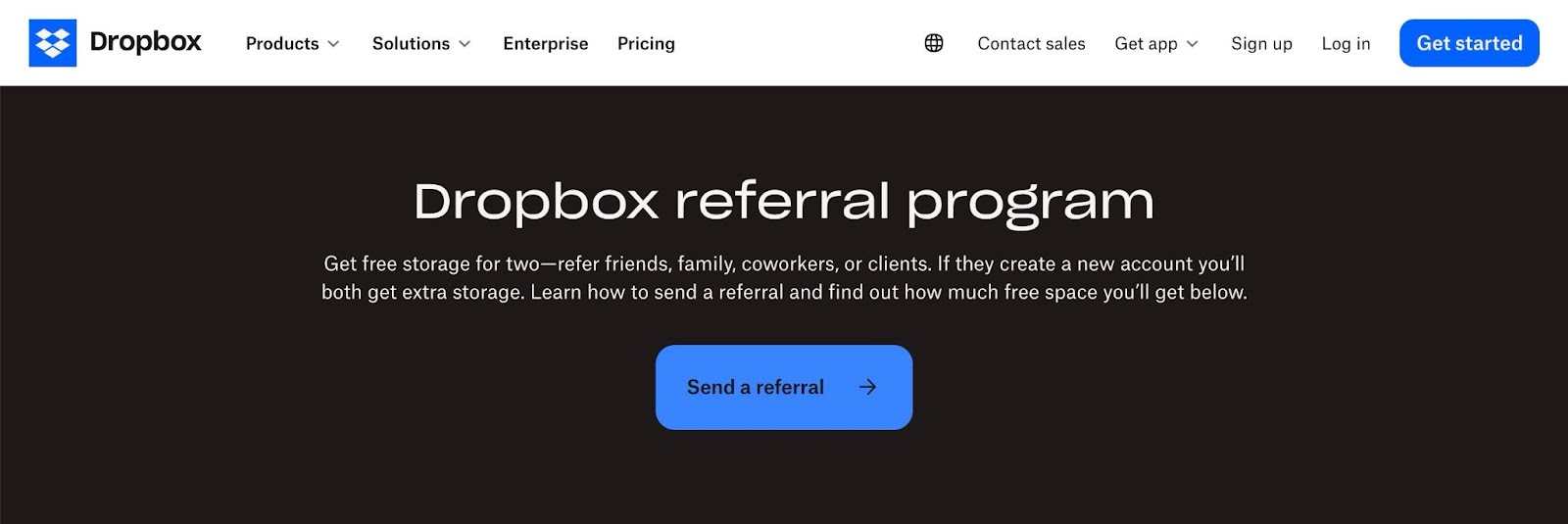
Dropbox was one of the earliest companies to perfect user referrals at scale, even in the B2B space. And it netted them 3,900% user growth in its first 15 months.
Its business-tier users are encouraged to share their unique referral link with coworkers or other businesses, earning additional storage space or service credits in return. The offer is simple, the onboarding is seamless, and the value to both sides is immediate.
Affiliate referral programs reward third parties — creators, consultants, agencies, or influencers — for sending traffic or leads your way. Unlike user referrals, affiliate programs scale through content, SEO, and outreach. The incentive is usually monetary and tied to performance: clicks, sign-ups, or closed deals.
They work best when:
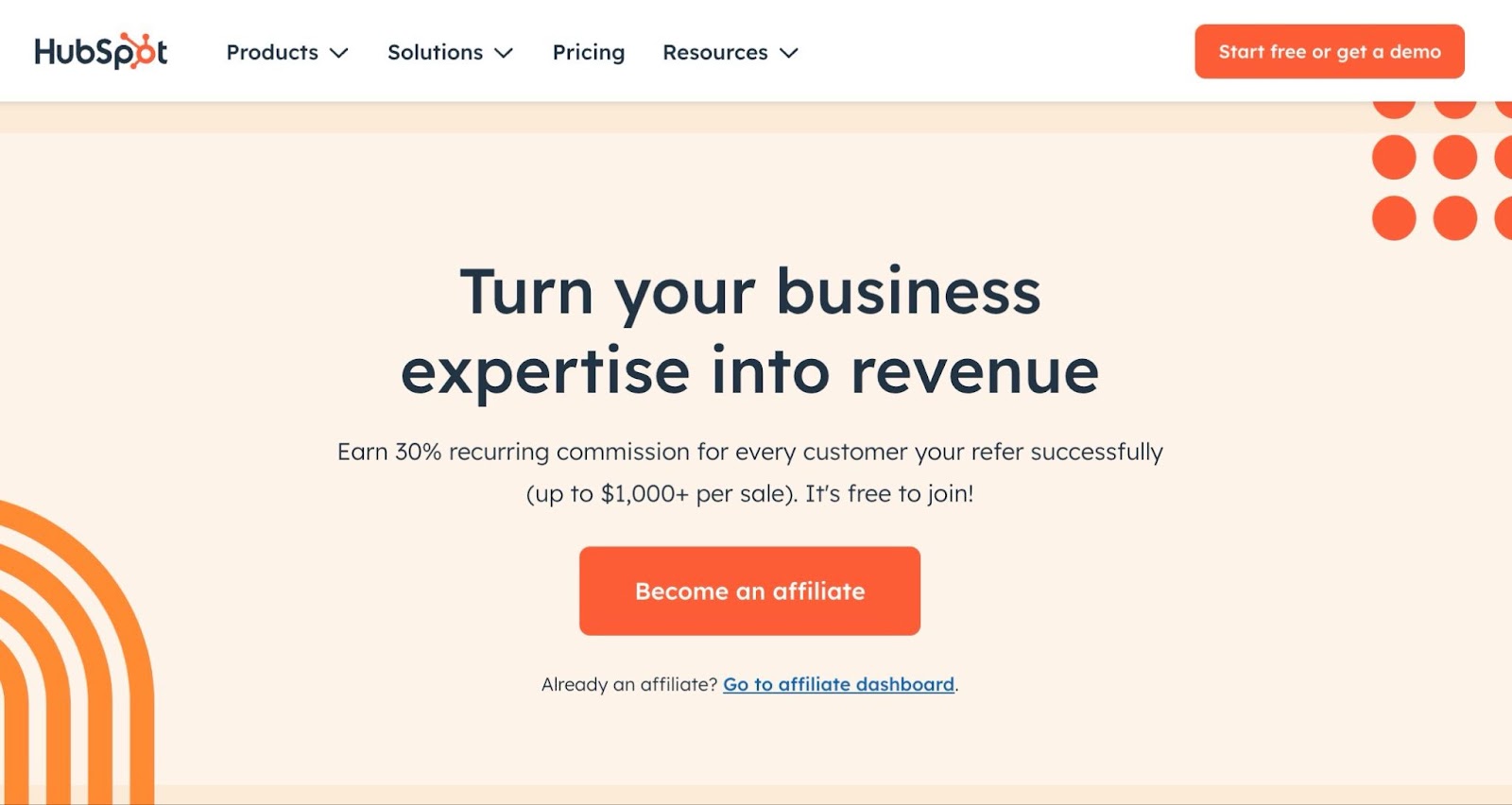
HubSpot offers affiliates generous commissions (up to $1,000 per product purchase) for promoting its suite of marketing, sales, and CRM tools. Their program includes a portal with tracked links, branded assets, and performance reporting. Through content creators, review sites, and consultants, HubSpot turns external audiences into a powerful top-of-funnel engine.
Influencer referral programs involve partnering with niche thought leaders, industry experts, or high-trust creators who have influence over your ideal buyers. These people are consultants, analysts, newsletter authors, or LinkedIn personalities whose audience listens when they recommend a tool or service.
These work best when:
Notion has quietly built a network of productivity influencers and creators, many of whom consult with teams on how to structure internal documentation and project management. Instead of just paying for shoutouts, Notion empowers these influencers (who are also their own power users) to teach others how to use the product, refer enterprise teams, and even sell their own templates.
Value-added referral programs tap into partners who already have trust-based relationships with your target customers—think resellers, service providers, consultants, system integrators, and tech partners. These partners refer your product because it makes theirs more complete.
These work best when:
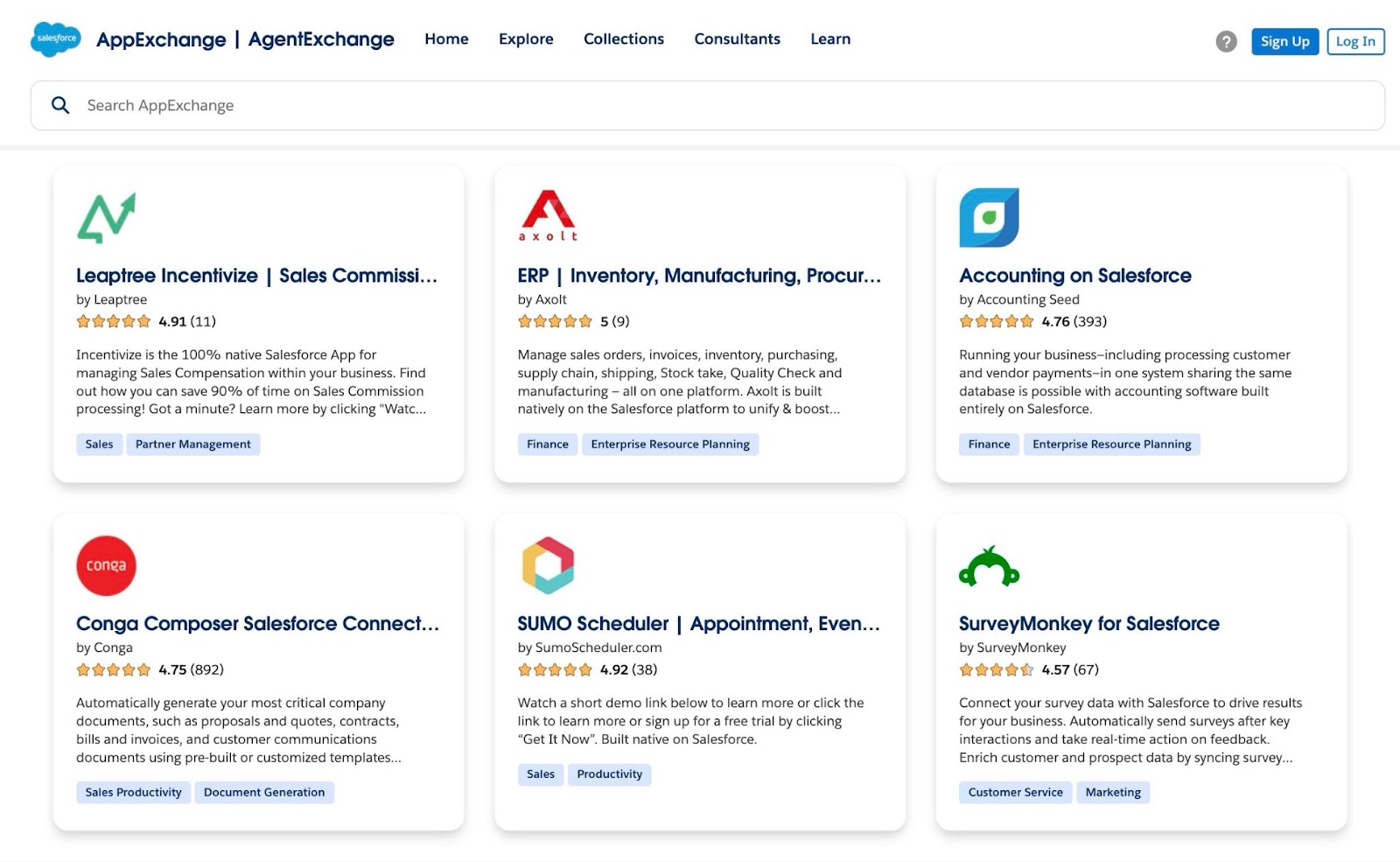
Salesforce has a network of thousands of consulting firms and systems integrators who customize and implement Salesforce for specific industries. They've also built an entire ecosystem around value-added referrals through their AppExchange marketplace, which allows partners to list their Salesforce-friendly products in exchange for a small cut (similar to, say, the App Store).
CS-triggered referrals are timed around key success moments. The idea is simple: ask for a referral when the customer is happiest. That could be right after onboarding, a major win, a milestone reached, or a glowing NPS score. It’s proactive, contextual, and feels natural because it’s tied to real value delivered.
They work best when:
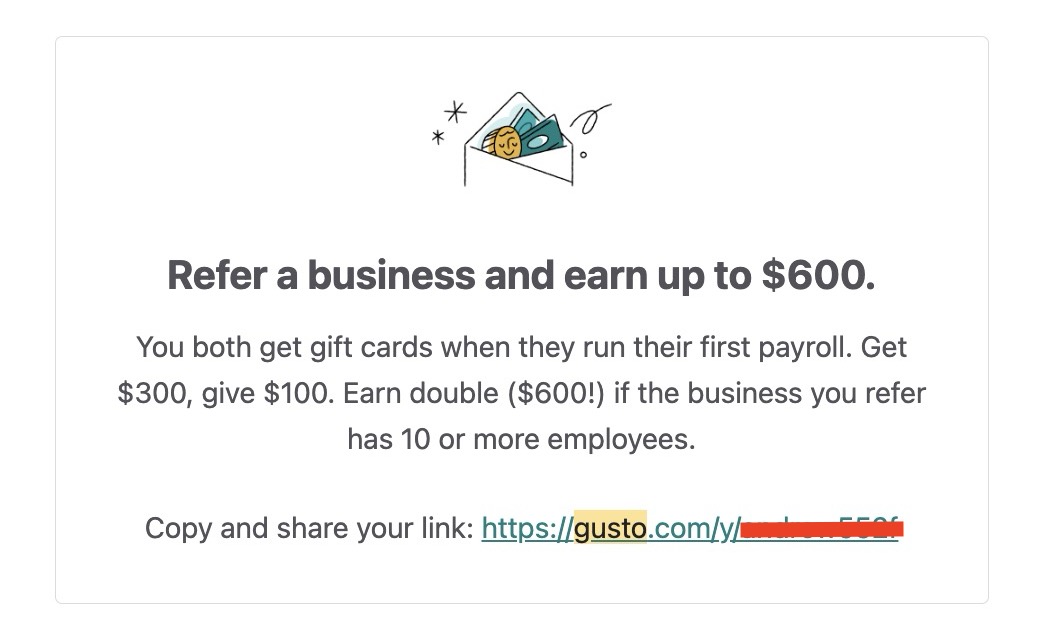
Gusto, the payroll and HR platform, triggers referral asks via email at specific customer milestones, like when someone runs their first successful payroll. These moments are high-trust and high-satisfaction, making the ask feel timely. Gusto offers $300 for each successful referral, but what makes it work is the when, not just the what.
The best B2B referral programs don’t just ask for referrals, they make people want to send them. And while cash is nice, it’s not always the most motivating incentive. What works better is rewards that feel aligned with your brand, your product, and your referrer’s goals.
When designing your referral incentive, you’ll need to decide: do you reward just the referrer, or both the referrer and the referee?

One-sided incentives reward only the person making the referral. They’re flexible, easy to implement and track, and work well in affiliate-style or performance-based programs. But, they can feel transactional.
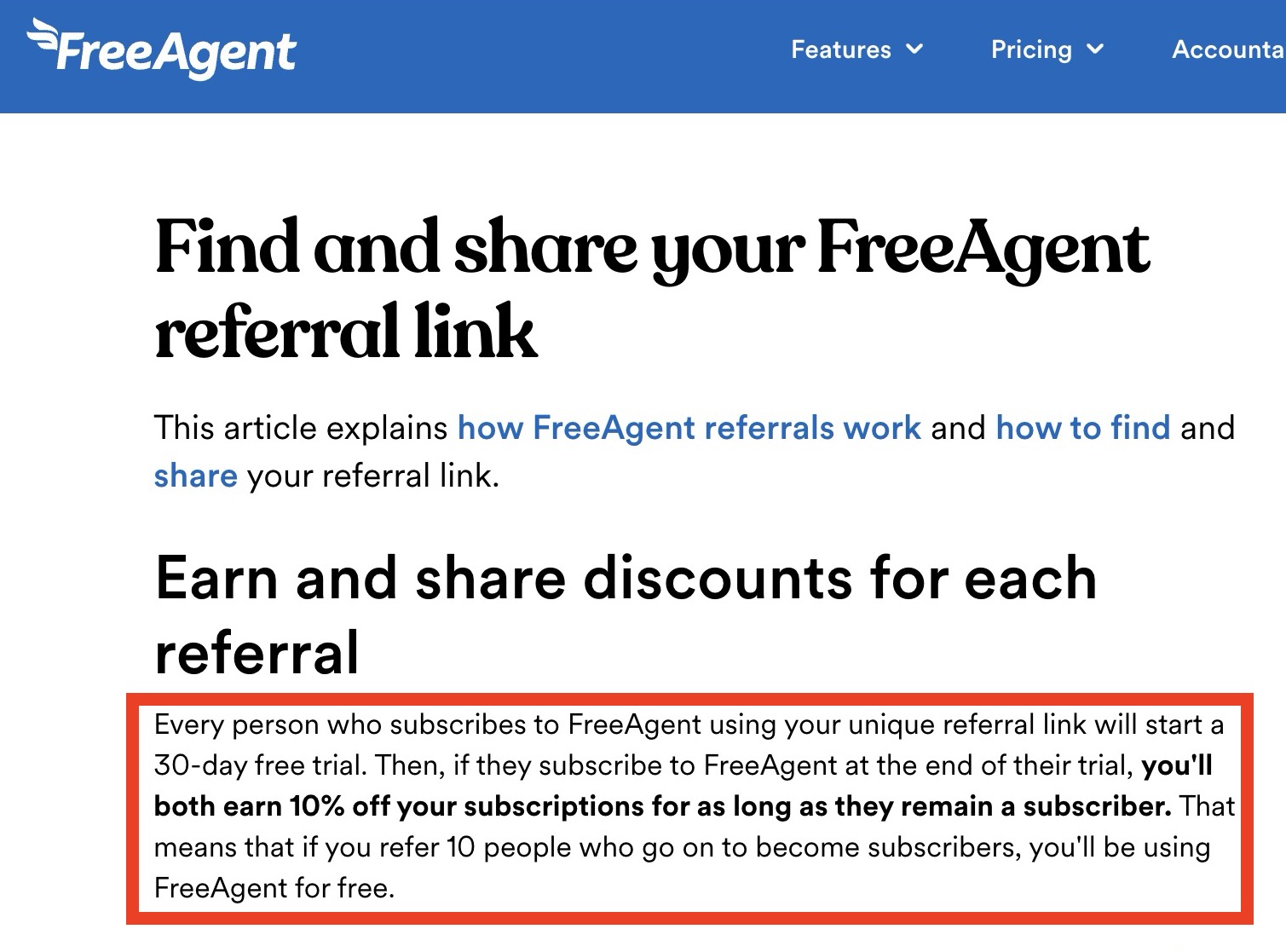
Dual-sided incentives reward the referrer and the person being referred. The incentive for the referee might be a discount, onboarding perk, or exclusive access — something that makes accepting the intro feel like a win. They encourage referrals within close professional networks, but they're slightly harder to manage.
The bottom line: If you're focused on volume and reach, one-sided incentives can scale faster. But if you're focused on quality and relationship-based referrals, dual-sided incentives build more trust—and often result in higher conversion rates.
Just like with pricing, your referral incentives can be variable or fixed. The structure you choose signals how much you value a referral and determines how scalable (or risky) the program is as it grows.
The former scales with deal size, making it ultra-appealing for high-ticket B2B sales. It's the best way to reward partners, consultants, or affiliates who influence large deals. But it's too “salesy” in peer-to-peer or customer referral contexts.
Instead of a flat payout, our users see better results when they offer bigger rewards for higher-impact referrals.
This aligns your incentive spend with real business results and motivates referrers to send quality, not just quantity.
Pro tip: Add surprise bonuses for hitting milestones — e.g., “Refer 3 companies this quarter, and get a free ticket to our annual summit.”
Your goal here is simple: make it ridiculously easy for people to refer you, and equally easy for your team to track and reward them.
Here’s how to build a referral process that scales:
You need a system that tracks referrals from start to finish: who sent them, where they came from, what stage they’re in, and how much they’re worth. Deeto offers end-to-end referral management built for B2B. It automates everything from referral tracking to CRM sync and reward fulfillment.
You can use it to:
Pro tip: Deeto even lets you run multiple referral workflows simultaneously—ideal if you want to test user referrals and partner referrals side-by-side.
Referrals work best when they’re timely. With Deeto, you can trigger referral asks automatically based on customer behavior, like completing onboarding, hitting a usage milestone, or giving a high NPS score.
Examples:
Deeto lets you plug these touchpoints right into your product or email flows without manual setup.
If users and your internal teams can’t track what's happening, you won't be able to scale your program past a few people.
Deeto provides a clean, branded referral dashboard where:
This transparency builds momentum and reduces support tickets.
No matter how much you can do with software, you still need a person responsible for referral performance (either from sales or CS). That owner should monitor the pipeline, update campaigns, and coordinate with sales and CS.
Within your platform, make sure you track referral velocity and conversion and run reports for department leaders.
If you're stuck approving every single reward that goes out, you won't be able to handle the simple handoffs like a user sharing their link with a coworker.
Deeto automates payouts using the link for attribution, whether it’s:
You define the trigger — lead qualified, meeting booked, deal closed — and Deeto handles the rest.
Referrals touch every team, so make it easy for Sales and CS to participate. Reps from both departments should be able to submit referrals from directly inside their workflow, then get notified when a customer becomes eligible to refer.
They should also be able to view each referral's impact on closed-won revenue, and each referrer's net impact on revenue growth overall.
That way, you're actually operationalizing your referrals across the whole company.
To prove ROI (and optimize for it over time), you need clear metrics and tight feedback loops. For that, there are six critical metrics to measure:
As your referral rate increases, you should see corresponding decreases in time-to-close and CAC and corresponding increases in conversions and CLV.
Most B2B referral programs don’t fail because the idea was bad. They fail because the execution overlooked the nuances of how people behave, how B2B sales actually work, or how to keep momentum alive.
Here's why that happens, and what to do instead:
Too many companies launch a referral program, mention it once in a newsletter, build a web page for it, and then wait for leads to roll in.
What to do instead: Treat your referral program like a product launch. Create email campaigns, in-app prompts, customer success scripts, and partner webinars that actively promote it.
If your reward system takes a math degree to understand or offers something your audience doesn’t value, you'll struggle to find advocates willing to take part, and you'll have a hard time scaling your program.
What to do instead: Test rewards with your audience before rolling them out. Use surveys or interviews to find out what they actually care about (hint: it’s not always cash). Then simplify the terms and spell them out in plain English.
Most businesses ask for referrals at the wrong time—either too early (before value is proven) or too late (when engagement has faded).
What to do instead:
Map your customer journey and pinpoint moments of peak satisfaction—right after onboarding success, a positive CSAT score, or a product milestone. That’s when to ask for a referral.
A silent program is a dead program. If referrers never hear back about their leads or rewards, they might stop referring, even if they love your product.
What to do instead: Automate acknowledgment emails, status updates, and payout confirmations. Over-communicate, not under.
You'd be surprised how many programs stall because no one internally knows what’s working, what’s not, or how to improve it (you can solve this with software).
What to do instead: Build analytics into your program from day one. Use UTM links, CRM tracking, or referral software to measure source quality, win rates, and payout effectiveness. Review monthly and iterate quickly.
What works for self-serve SaaS products won’t work for enterprise-tier products. More complicated sales cycles require additional tiers, terms, and tracking mechanisms.
What to do instead: Tailor your referral motion to your sales cycle, deal size, and buyer behavior. Enterprise deals need referral introductions, not just link shares and signups. Your program should reflect that nuance.
Deeto gives you a centralized hub to run, measure, and optimize referral programs that scale. Instead of duct-taping spreadsheets to email sequences, you get a system that just works (and grows with you).
With Deeto, you can:
And it centralizes dozens of other customer-led growth tools: testimonial capture, case study workflows, UGC collection and curation, reference management, and more.
Request a demo to see it in action.

Discover how to build a powerful B2B referral program with proven strategies, referral ideas, and tools to drive leads.
Your customers are always talking. They’re constantly leaving reviews, replying to surveys, and commenting on social media.
But plenty of companies stop after collecting this information. And in doing so, they miss a major opportunity.
Your customer feedback isn’t just social proof. It’s content.
You can repurpose it into emails, ads, landing pages, videos, social media posts — any point in the purchase funnel where you need to build trust and drive decision-making.
In today's guide, you'll learn the what, why, and how of repurposing customer feedback into high-impact marketing content that works across every channel.
When potential customers see someone else solve the exact problem they’re facing, they lean in. It gives them confidence. It reduces friction. It answers the question: “Will this work for me?”
That’s what moves people from "maybe" to "I'm in."
You don’t need to hire a copywriter to guess what your audience cares about, though. Your customers are already spelling it out for you. You just need to capture it and turn it into content.
This is exactly why customer feedback is the most powerful tool in your marketing toolbox. When you start treating it as raw marketing material instead of something that's just "good to know," you create a consistent stream of trust-building, conversion-boosting content — content you can use to drive web conversions.
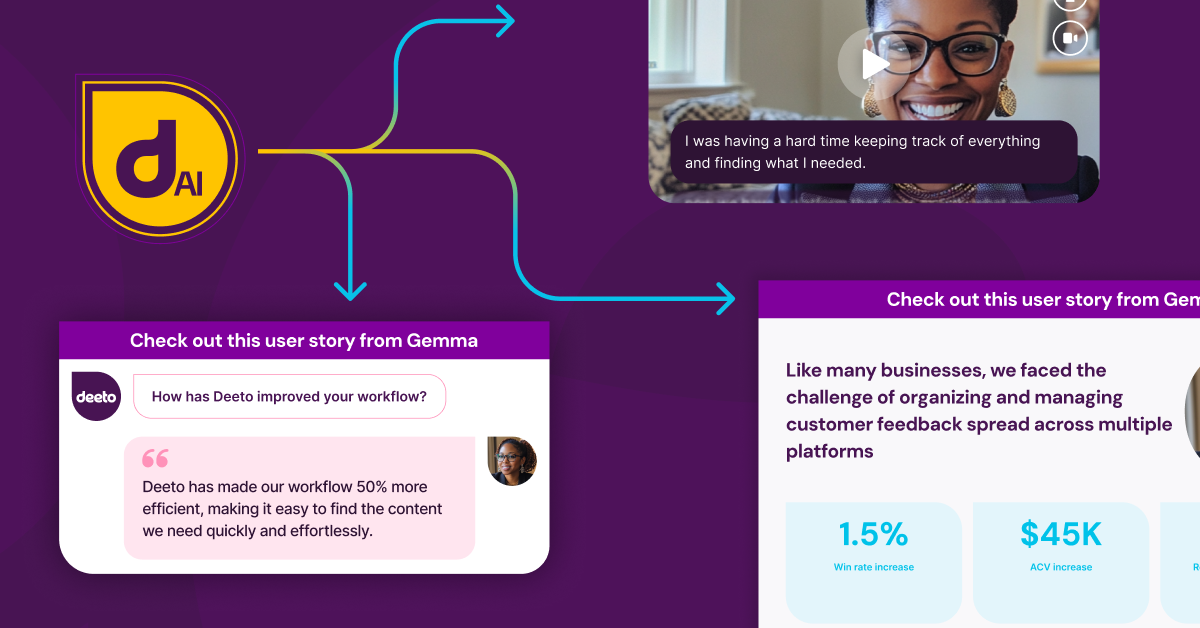
Repurposing your customer feedback is important because it turns real customer experiences into powerful, trust-building marketing content. It gives you credible, conversion-driving language straight from your audience, helps highlight what actually matters to your buyers, and keeps your messaging fresh without the guesswork.
In Neilsen's recent study of 40,000+ buyers across 56 countries, 88% said they trust customer feedback and recommendations over any other form of marketing messaging. After seeing a trustworthy review, 92% of B2B buyers are more likely to buy that product.
The reason is simple: When you use real quotes, language, and outcomes, you're not just telling people your product works, you’re showing them that it already has.
Your best customers say things in ways you never would’ve thought of. They describe pain points, benefits, and breakthroughs in the exact words your next buyer is probably already thinking. When you echo that language across your site, ads, and emails, it feels more personal.
You don’t need to start from scratch. Customer feedback is already flowing into your business through reviews, emails, support tickets, social posts, surveys, and calls. This makes it one of the lowest-effort ways to improve your content.
You might think people buy your product for Feature A. But what if your top customers all rave about Feature C?
Repurposing feedback forces you to zoom in on what your audience cares about, not what you think is important. That insight sharpens your messaging, your positioning, and your future product decisions.
Sales, support, and marketing teams all talk to customers differently. But when everyone pulls language and messaging from the same source (your customers), you create brand alignment. That means smoother pitches, stronger emails, and less “reinventing the wheel” across departments.
Stuck on what to post next on social? Need a new angle for your next ad campaign?
Customer feedback gives you an endless stream of ideas, quotes, and stories that are relevant, sharp, and close to the voice of your market. It’s like a living, breathing swipe file that updates itself.
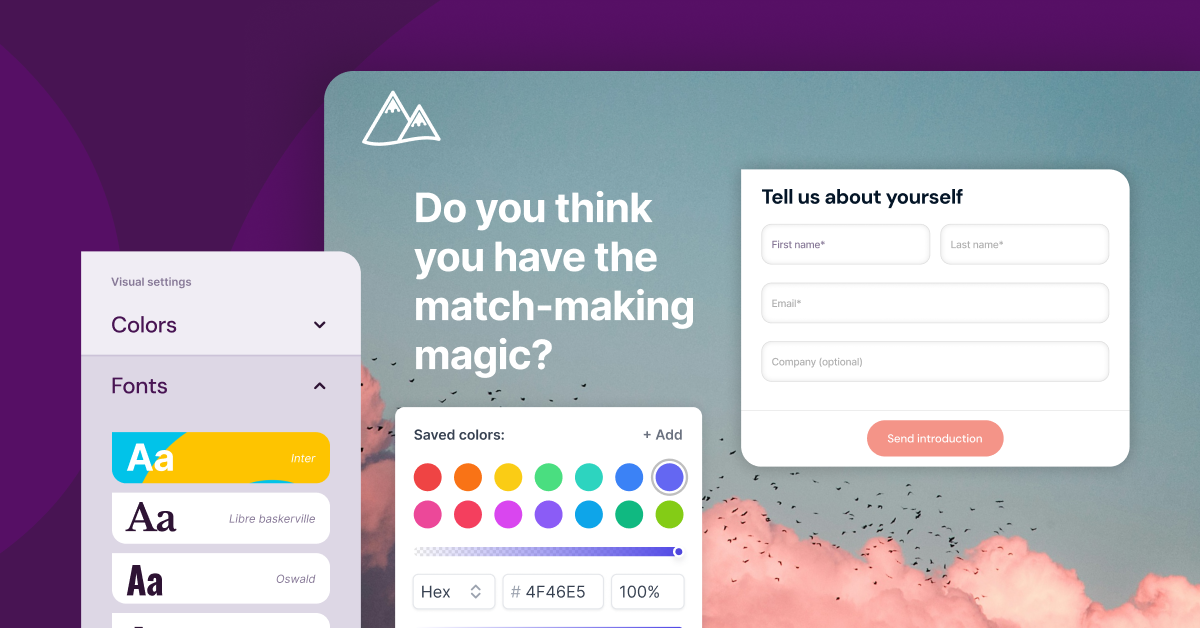
To actually reap those benefits, your first step is knowing where to look. Here are five high-impact sources of customer feedback, and how you can turn each into marketing gold:
Sites like G2, Trustpilot, and Google Reviews are the easiest sources of social proof to pull from, and they're some of the most powerful. They’re publicly available, and often written in your customer’s raw, unfiltered voice.
If you're using Deeto, our new Imported Contributions feature lets you push reviews across personal microsites (another Deeto feature for your sales team), G2 (via integrating the two platforms), and on-site widgets in seconds, without manual copy-paste.
Testimonials and case studies are deeper, more structured stories. They're perfect for turning one win into dozens of content pieces.
From a single testimonial or case study, you can extract:
Deeto’s AI-powered extraction feature makes the process easy. Upload a case study, and it automatically pulls out key moments, quotes, and summaries you can reuse instantly across channels.
This is how you scale social proof without creating from scratch every time.
When people tag you in a win, drop a comment about your product, or post a screenshot of their results, you’ve got powerful, organic validation.
Repurpose these into:
Bonus tip: You might be able to turn positive DMs into anonymous quotes if you can’t get public approval.
When someone messages support to say, “I finally figured this out—it saved me 4 hours,” that’s a conversion-ready quote.
Use those moments to:
To get these kinds of insights, talk to your support and success teams.
NPS responses tell you why people love you (or don’t). Surveys reveal what’s working and what’s missing. For your marketing content, look for recurring phrases, surprising praise, and moments of delight.
Repurpose that into:
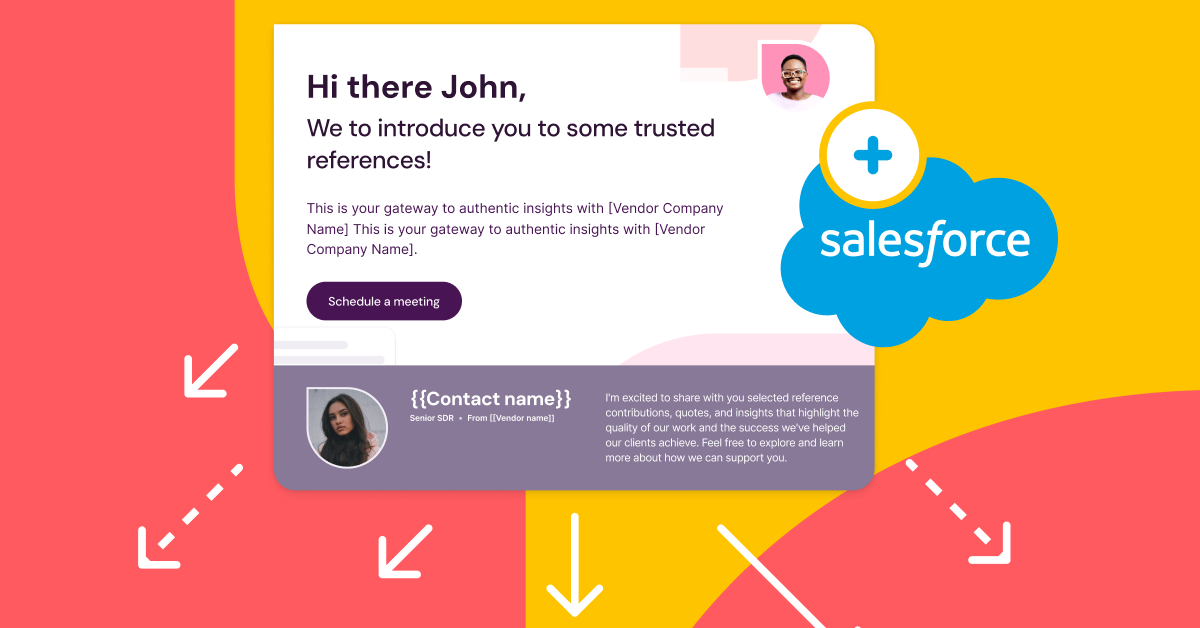
Customer feedback is incredibly versatile. One piece can be turned into multiple marketing materials, and you can even use it to address concerns or highlight benefits that are relevant to a specific segment of your target market.
Below, we'll explore four of the most effective ways to turn the feedback you've collected from the sources above into content that drives conversions.
Social is one of the easiest places to inject real customer voices.
Start simple:
Then, go beyond the usual:
This is lightweight, high-impact content that builds trust in your feed daily.
Social proof works best when it’s placed where decisions happen.
Use it strategically:
If you want to go further, use heatmaps and scroll data to place testimonials where people hesitate most. Then, A/B test quotes with different tones (e.g., emotional vs. ROI-driven) to see what converts the best.
For a more detailed look, check out my guide showing how three different companies use customer feedback to drive web conversions.
Since customers' success with your product is so closely intertwined with your USP, it only makes sense to let it drive parts of your content strategy. By incorporating real-life examples of how your product has helped customers, you differentiate your content from others, and you place your product as the solution to the problem you're solving with your content.
One idea is to use multiple feedback sources to write a trend piece: “5 Things Our Power Users All Have in Common.” To increase adoption, share that piece with all your new users (particularly those with low engagement rates) to show the value of your product.
AI makes it effortless to turn one piece of feedback into ten different assets.
With Deeto's centralized customer content repository, it's easy to organize, structure, access, and publish content across multiple marketing channels.
To know whether you're actually turning that customer feedback into sales revenue, there are six key metrics to pay attention to:
This is your most direct signal. Are pages or campaigns with testimonials, quotes, or customer stories converting better than those without?
Test it by A/B testing landing pages with and without social proof, measuring lead gen forms, CTAs, and demo requests after adding feedback-based content, and tracking product page conversions post-implementation.
Are people engaging with the content you’ve created from feedback?
Watch how repurposed reviews perform in:
Higher CTRs mean the message resonated.
Feedback-based content is supposed to feel more human and relatable. If it's succeeding in that department, it should also boost engagement.
Measure engagement with your content by looking at:
If your feedback-rich campaigns convert better, your CAC should decrease over time. Watch for changes in CAC across paid channels, email funnels, or website segments where social proof was added.
Lower CAC = higher efficiency.
Although it's " for marketing," customer feedback and other user-generated content are used throughout the sales cycle to build credibility, handle objections, and drive faster decision-making.
Deeto centralizes your content, so you can equip your SDRs and AEs with customer success stories, quote libraries, and case studies specific to each prospect's use case.
To understand how effective this is for your business, look at:
The average B2B sale requires more than 40 touchpoints. Use tools like Google Analytics, HubSpot, or your CRM to track where repurposed content shows up in the buyer journey (Deeto can help with this, too).
Did a blog post featuring a customer story bring in qualified traffic? Did someone convert after clicking an ad using a testimonial? Are your most engaged prospects reading case studies?
Look at assisted conversions, not just last-click attribution.
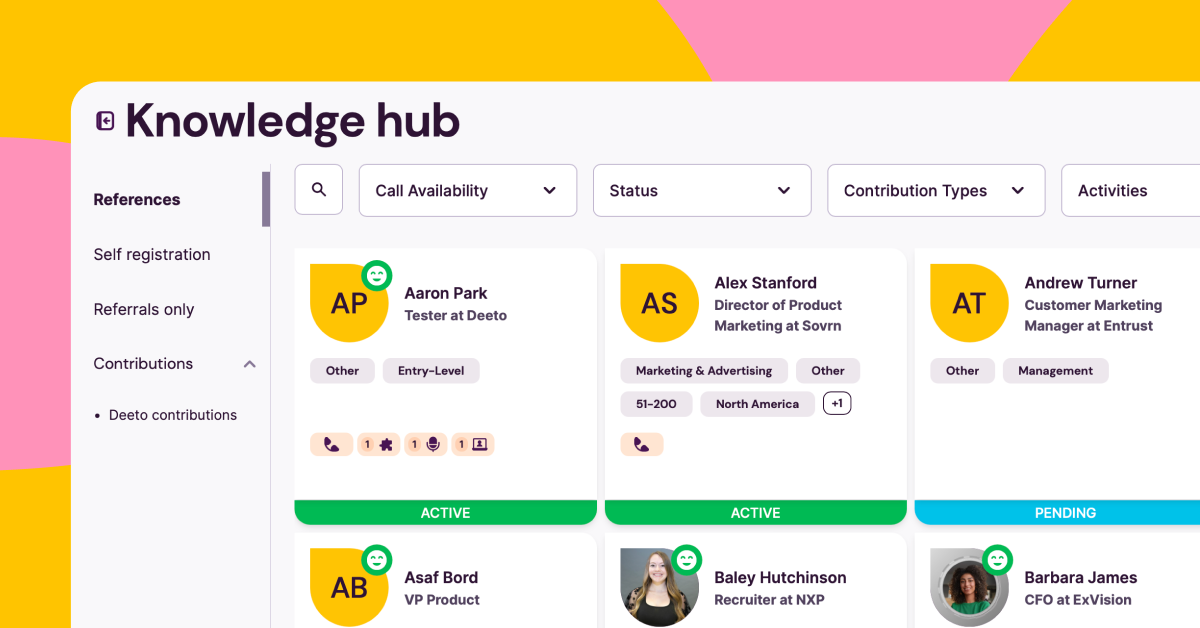
Deeto's AI-powered platform simplifies the entire process of collecting customer feedback, organizing it, turning it into content, and distributing it across your entire company — Marketing, Sales, Product, and Success.
Request a demo to see how Deeto's platform helps companies fully leverage the power of their customers' voices.

Learn how to turn customer feedback into powerful marketing content. Discover strategies for repurposing reviews and UGC
Organic growth is a fantastic way to build your business. Growing a business organically means using customer-driven strategies instead of paid advertising. This prioritizes long-term sustainability, trust, and customer engagement to increase brand loyalty and reduce acquisition costs.
An organic growth strategy also allows you to scale efficiently by leveraging existing customers, word-of-mouth referrals, and quality-driven strategies rather than expensive marketing campaigns.
Unlike paid growth strategies—which often yield short-term gains—organic growth emphasizes long-term success through trust, credibility, and consistent value delivery.
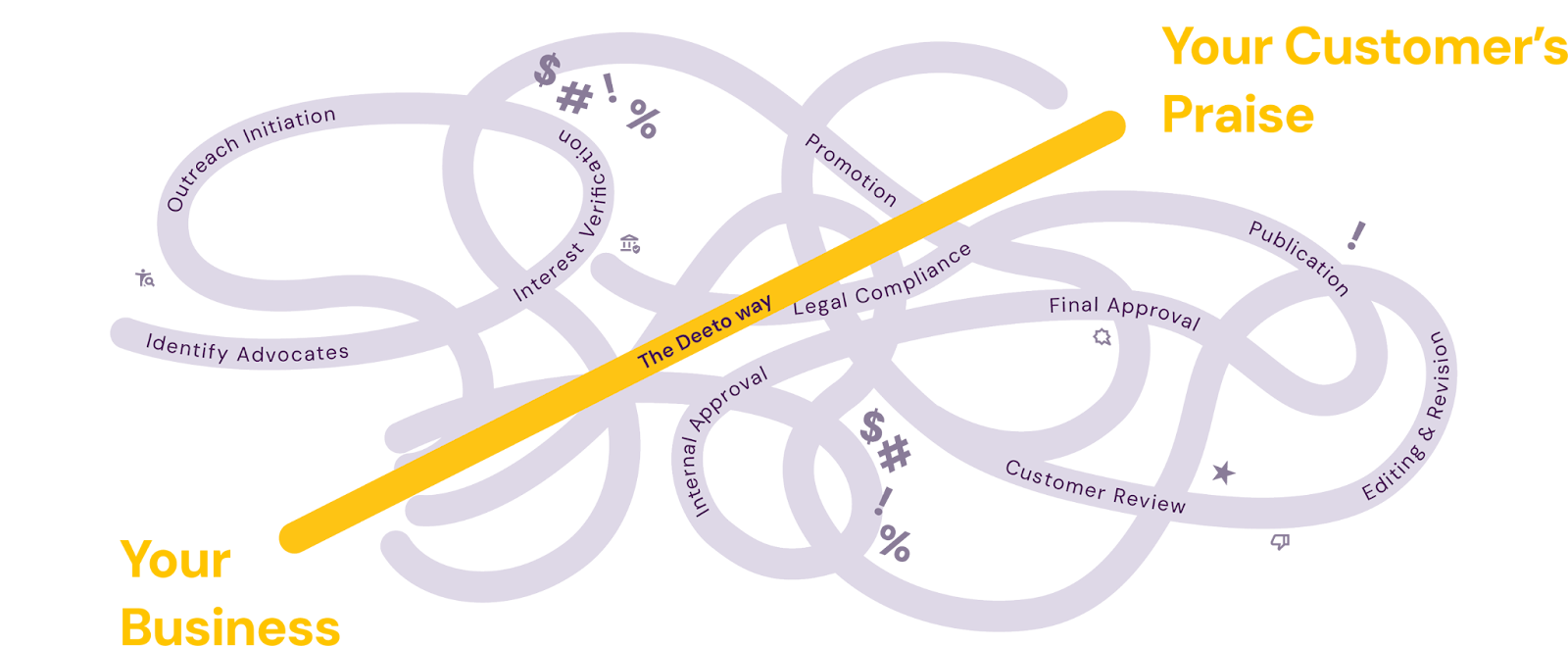
Organic growth is business expansion achieved through customer retention, referrals, and word-of-mouth marketing rather than paid advertising. It focuses on sustainable growth, authentic relationships, and long-term customer value.
If your organization achieves organic growth, you’ll build customer satisfaction and brand advocacy. You’ll also create valuable experiences that often keep customers.
Customers prefer brands that offer genuine interactions rather than aggressive sales tactics. Transparency, ethical business practices, and value-driven messaging help establish trust, which makes customers more likely to stay loyal.
Businesses that focus on providing real solutions—rather than just pushing sales—build deeper connections with their audience. In addition, customers appreciate brands that prioritize their needs, leading to repeat purchases and long-term loyalty.
Strong, lasting customer relationships translate to higher brand advocacy and organic referrals. This reduces dependence on expensive customer acquisition methods, making growth more sustainable in the long run.
An organic growth strategy isn’t just important for businesses, but it’s also important for customers. Let’s look into some reasons why:
Loyal customers contribute more revenue over time through repeat purchases and referrals. Businesses that focus on customer retention see greater profitability without increasing acquisition costs.
An organic growth strategy leverages existing customers, reducing the need for expensive marketing campaigns. Instead of constantly spending on acquiring new customers, businesses can focus on nurturing and expanding their current customer base.
Strong customer relationships translate into positive reviews, higher credibility, and a brand image that attracts new customers organically. A well-respected brand naturally gains traction in the market.
Happy customers naturally promote your brand to their networks, fostering organic expansion. A strong referral network can significantly boost sales and customer trust.
It’s crucial to identify the touchpoints. Understanding where and how customers interact with your brand helps optimize the user experience.
You must also understand customer needs at each stage. Addressing pain points and providing solutions at each phase of the customer journey ensures higher satisfaction.
First, you must optimize for user experience (UX). This means ensuring easy navigation, responsive design, and clear messaging to improve customer satisfaction.
You must also provide exceptional customer service—including quick resolutions, attentive support, and proactive engagement to build trust.
Furthermore, it ensures personalization and customization. Tailoring experiences to individual preferences increases engagement and customer happiness.
Customer feedback provides insights to refine products, services, and overall experience. You should encourage reviews and act on customer input to demonstrate a commitment to continuous improvement and customer satisfaction.
Creating valuable and informative content is essential for positioning your brand as an industry leader.
If you offer blogs, whitepapers, webinars, and educational resources, your brand can share insights that resonate with your audience and showcase expertise. This approach not only helps establish authority but also attracts potential customers who need trusted guidance.
Thought leadership also plays a crucial role in building credibility. As you share your expertise, you position your brand as a reliable source of information. This trust can significantly impact customer acquisition and retention, as customers are more likely to choose a brand when they see an expert in its field.
Open and honest interactions are at the core of building lasting relationships with your customers.
Transparency builds trust and shows that your brand values clear communication and is committed to being upfront about its practices and policies. This openness encourages customers to feel more connected and confident in their choice to engage with your brand.
Additionally, addressing customer concerns promptly is essential in demonstrating your commitment to service. When you respond quickly to issues, it reflects your brand’s reliability and dedication to customer satisfaction.
Customer testimonials and reviews play a critical role in building trust. Real experiences from satisfied customers help reassure potential clients that your brand delivers on its promises.
Positive feedback acts as a form of social proof, validating your brand’s credibility and attracting new business.
Case studies and success stories further enhance your brand’s credibility by demonstrating proven results. When potential customers see that your brand has successfully solved challenges for others, it increases their confidence in your ability to meet their needs.
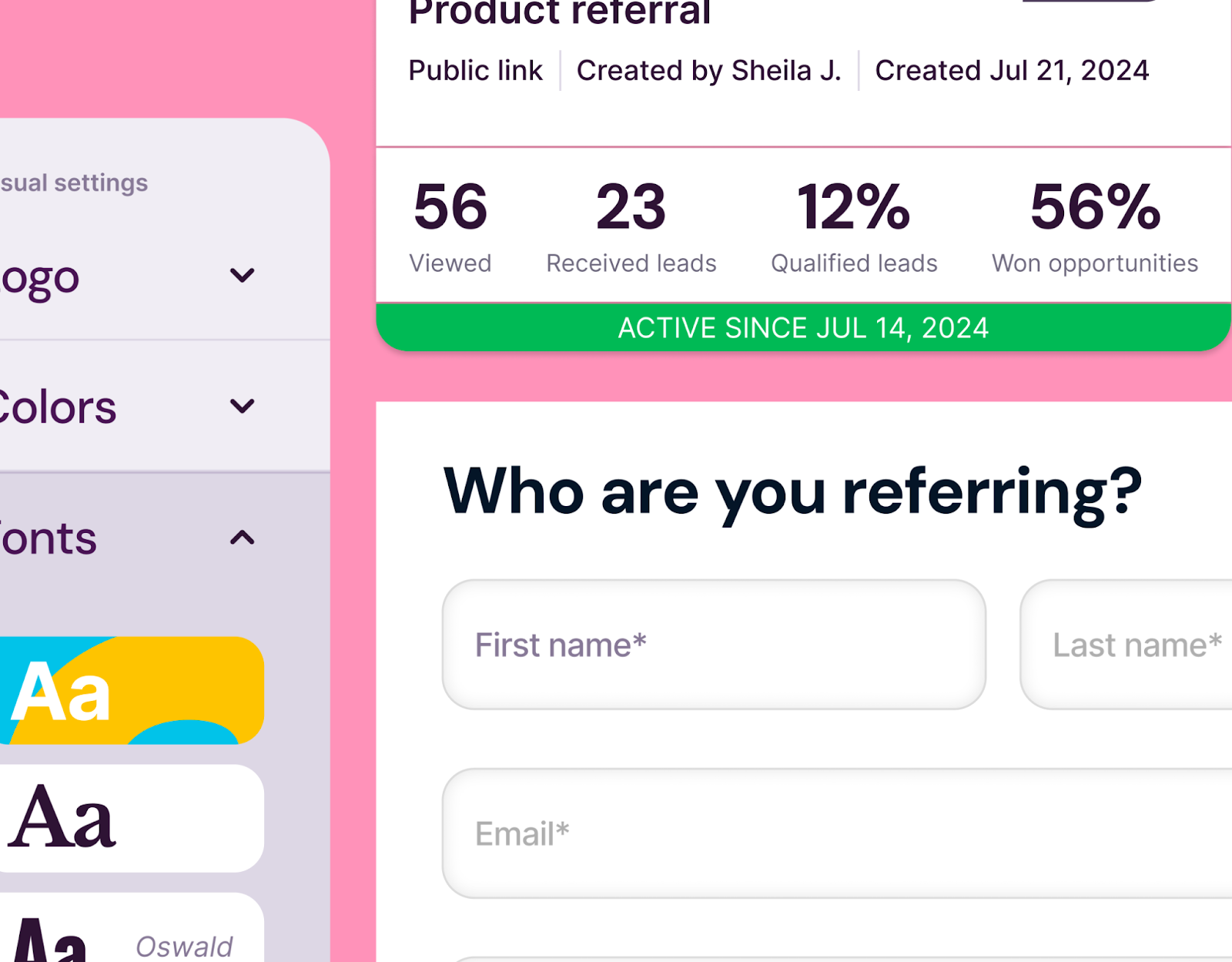
Book a Demo - Start Using Deeto AI
You should recognize and reward loyalty. You can achieve this with exclusive perks for dedicated customers to encourage repeat business and referrals.
There are many excellent ways to engage your customers. Let’s look at some of the best ways:
Timely responses to reviews demonstrate attentiveness and build trust. You must address feedback—both positive and negative—to show customers that their opinions matter.
Social media groups and forums are critical for growing your community. To strengthen customer relationships, you should create spaces for meaningful discussions and peer-to-peer support.
You should also consider events and meetups. It strengthens customer connections through real-life interactions and builds deeper loyalty.
You should ask questions and initiate discussions. Engaging customers directly makes them feel valued and involved. It’s also critical to respond to comments and messages. That’s because active engagement strengthens relationships and brand trust.
You should build a positive and inclusive environment. A welcoming community enhances customer satisfaction and retention.
In addition, you should celebrate community achievements. You can achieve this by recognizing customer success stories to strengthen emotional connections with the brand.
Failing to actively listen to customers can lead to missed opportunities for improvement and decreased loyalty. Customer feedback - whether through reviews, surveys, or direct interactions—provides invaluable insights into what’s working and needs adjustment.
Brands that dismiss this feedback risk losing touch with their audience, which leads to lower retention rates and stagnant growth.
You should establish feedback loops, actively respond to concerns, and adapt strategies based on customer input.
Many businesses focus heavily on acquiring new customers while neglecting the ones they already have. However, retaining existing customers is often more cost-effective than acquiring new ones.
Companies should implement retention strategies such as personalized offers, loyalty programs, and proactive customer support.
Regular engagement, follow-ups, and appreciation gestures (such as exclusive content or early access to products) can turn first-time buyers into lifelong advocates.
Attracting new customers is essential, but engagement is what keeps them coming back. Without meaningful interactions, even the most successful acquisition campaigns will result in high churn rates.
You should prioritize relationship-building through personalized communication, community-building efforts, and consistent value delivery.
Whether through social media interactions, educational content, or responsive customer service, ongoing engagement ensures customers remain connected to the brand.
Many businesses rely too heavily on paid advertising while neglecting organic marketing efforts. A well-rounded strategy includes SEO, content marketing, social media engagement, and email marketing. These channels drive sustainable traffic and enhance brand credibility.
High-quality blog posts, informative videos, and interactive social content can attract potential customers and nurture existing ones.
Businesses that fail to invest in organic channels struggle to establish long-term visibility and authority in their industry.
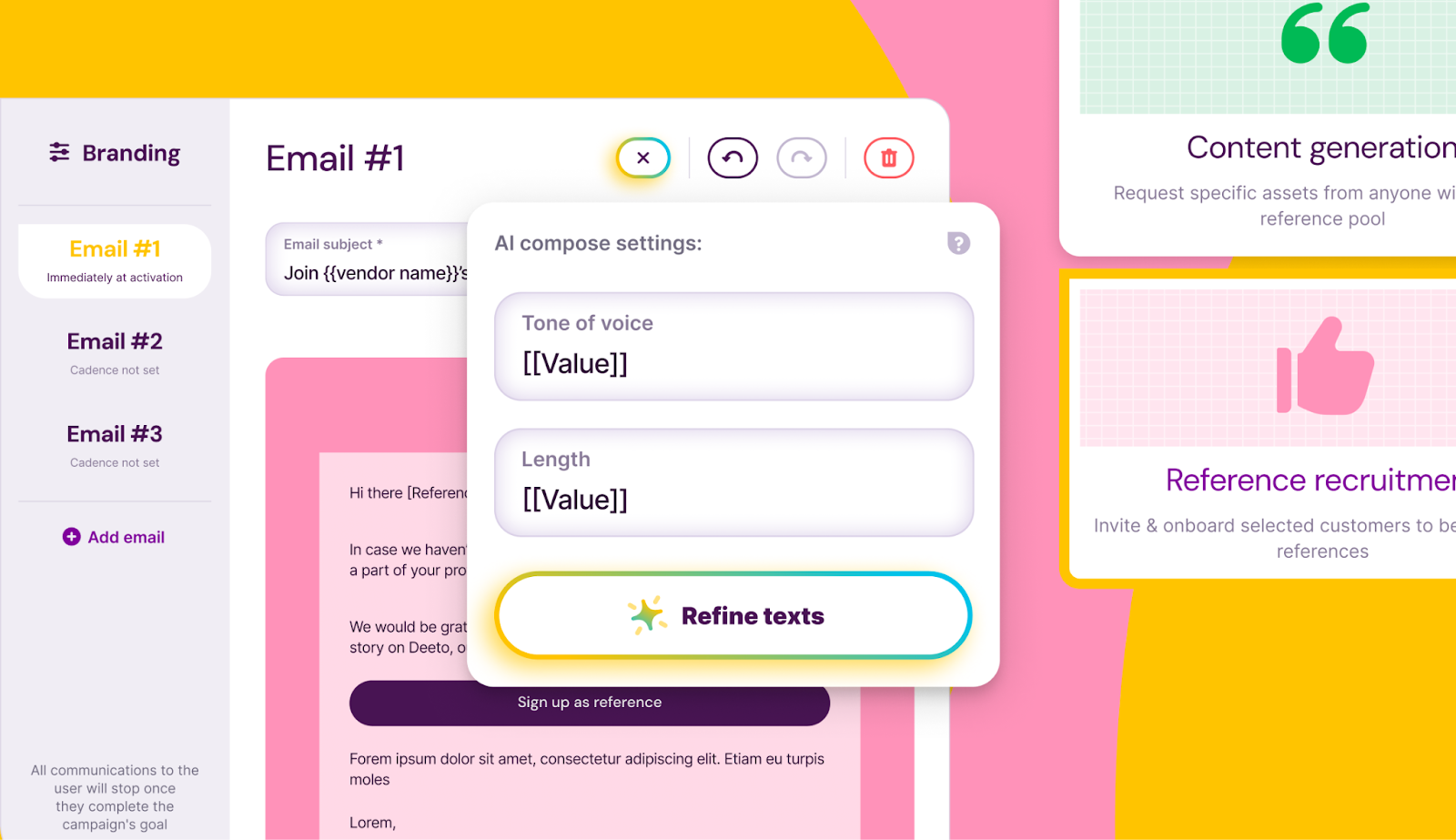
Deeto streamlines the process of engaging your customer base and transforming their insights into valuable assets for your sales, marketing, customer service, and product teams.
With centralized data and AI-driven insights, it simplifies connecting with prospects at scale and ensures communication is authentic. Schedule a demo today to see it in action.

Discover how to grow a business organically using customer-driven strategies and word-of-mouth marketing

See how Deeto helps you turn customer voice into a GTM advantage.